
Joint statement demands accountability, federal infrastructure, and binding commitments to make human rights real for everyone in Canada.
Regina (May 21, 2026) — As federal, provincial, and territorial representatives gather at the Forum of Ministers on Human Rights this week, the newly-formed Civil Society Forum for Human Rights in Canada is calling on governments to take immediate and concrete action on human rights implementation.
The Civil Society Forum delivered their statement to the Honourable Minister Marc Miller, responsible for human rights implementation at the federal level, the Honourable Minister Rebecca Alty, and the Honourable Rob Oliphant, along with Attorneys Generals from several provinces and territories — stressing the statement’s importance as a guidepost for human rights implementation at all levels of government.
“The timing of this Ministers’ Forum is critical. People across Canada are facing violence, discrimination, homelessness, environmental harm, and persistent inequality,” says Zoë Craig-Sparrow, Vice-President of Justice for Girls. “Canada participates in international review processes and receives recommendations, but domestically there is no implementation framework and no clear accountability mechanism. For Indigenous, racialized, migrant, low-income, women and gender-diverse persons, and disabled communities, these failures have life-and-death consequences.”
“Human rights cannot remain as simply words on paper. We need to close the gap between promises and action,” says Michèle Biss, Executive Director at the National Right to Housing Network. “When human rights go unimplemented, it shapes everything — people are excluded from decisions that affect them, and governments use narrow interpretations of their obligations in court to avoid accountability under the Charter. Governments at every level must step up to protect and save lives.”
Six Demands for Immediate Action
The Civil Society Forum is calling on governments to act on six priorities:
“As governments around the world openly challenge human rights, Canada has both the opportunity and the responsibility to demonstrate a different and more productive path forward, both in its interactions with other nations and through meaningful implementation at home,” says DJ Larkin, Executive Director of the Canadian Drug Policy Coalition.
“We are united in our shared belief that all human rights are indivisible, interdependent, and interrelated,” says Meghan Doherty, Director of Global Policy and Advocacy at Action Canada for Sexual Health and Rights. “And that systemic changes to Canada’s human rights infrastructure are necessary for the realization of any and all of our human rights.”
____________
The Civil Society Forum for Human Rights in Canada is a group of civil society organizations, advocates, and academics united around a shared vision: a Canada where human rights are not merely aspirational, but legally binding, fully funded, and felt in the daily lives of every person in this country.
Signatories
Despite being a signatory to numerous international human rights treaties, Canada has no formal infrastructure to implement recommendations from United Nations human rights bodies. This means that when the UN identifies gaps in Canada’s human rights record — on housing, health care, Indigenous rights, and more — there is no legal obligation, dedicated institution, or funded mechanism to act on them. The result is a persistent gap between the rights Canada promises and the reality people experience.
For more information, please contact:
Jessica Tan
Communications Lead
National Right to Housing Network
Email: jessica@housingrights.ca
Phone: 613-621-4575
The team at the Canadian Centre for Housing Rights extends its sincere gratitude to Annie Hodgins as she concludes her thirteen-year tenure with the organization, most recently serving as Executive Director from 2022 to 2025.
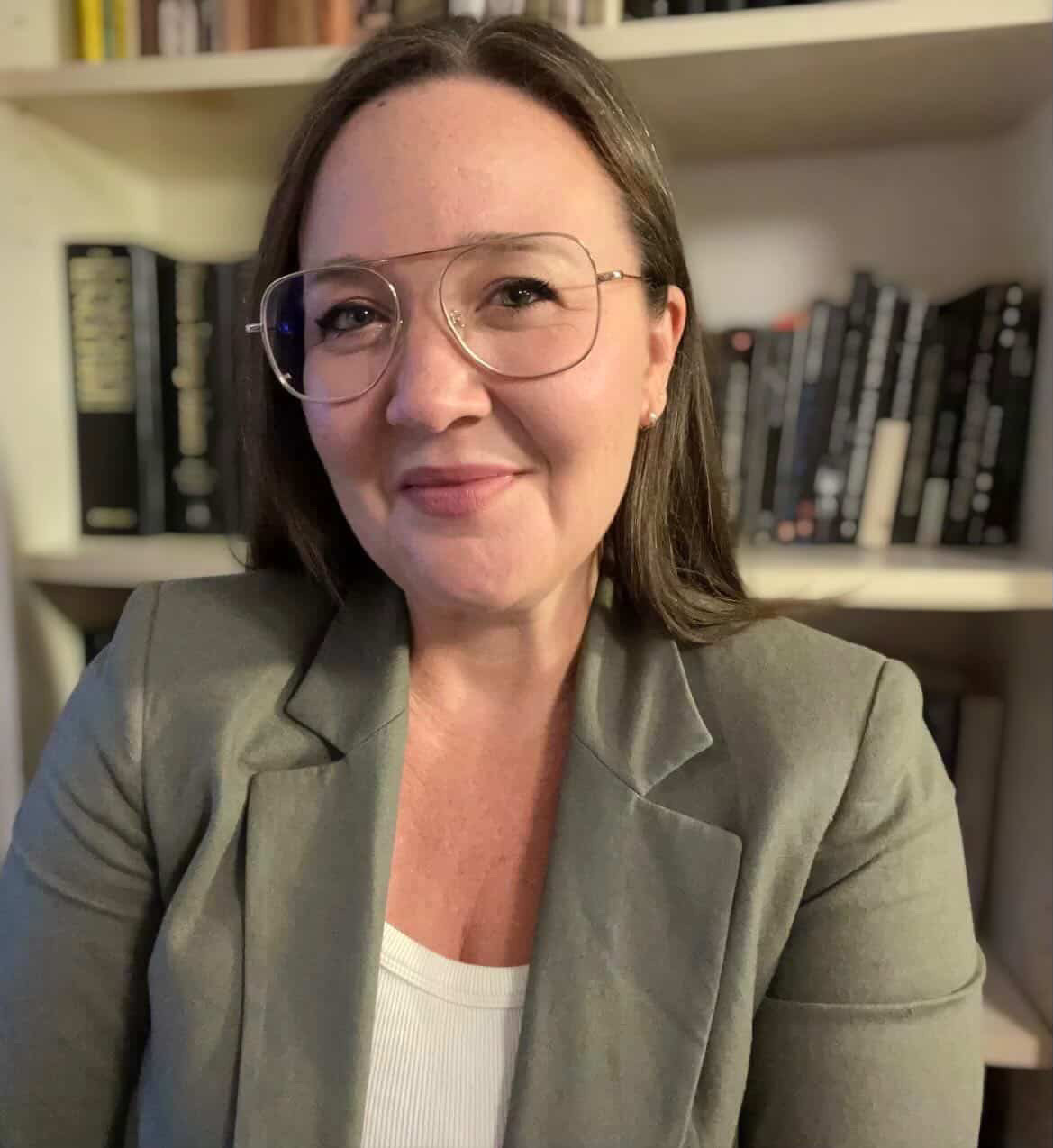
Over more than a decade of service, Annie played a central role in advancing CCHR’s mission at a time when housing insecurity has emerged as one of the most pressing social and public policy challenges of our time. Joining the organization in 2013 — when it was still CERA — and progressing through increasingly senior roles across programs, policy, fundraising, operations, strategy, and executive leadership, she helped guide the organization through a period of significant growth, institutional strengthening, and expanded national impact in support of advancing everyone’s right to housing.
Annie began her tenure designing and leading core programs, including CCHR’s legal services and public education initiatives for renters. Under her leadership, these areas expanded substantially, deepening the organization’s capacity to support individuals and families facing eviction, housing instability, and discrimination. Throughout her work, she consistently emphasized community-informed, evidence-based approaches, ensuring that frontline realities shaped program design, research, and policy contributions.
A strategic systems thinker, Annie worked to translate lived experiences of housing precarity into responsive programs, policy engagement, and collaborative initiatives that strengthened CCHR’s effectiveness and reach. Over the course of her tenure, she led and contributed to the development of numerous funded initiatives, securing more than $15 million in support while reinforcing the organization’s long-term sustainability and ability to serve renters across Canada.
Throughout her career at CCHR, Annie demonstrated a deep commitment to values-driven leadership grounded in accountability, inclusion, and strong governance. She helped modernize internal policies, performance frameworks, and organizational systems to better reflect principles of fairness, and impact, supporting a resilient and mission-focused organization.
As Executive Director, Annie provided executive oversight for a complex, multi-program portfolio of more than 20 integrated initiatives and an annual operating budget exceeding $3.2 million. During this period, CCHR continued its evolution from a primarily Ontario-based organization into a nationally recognized voice in housing rights, strengthening partnerships with governments, community organizations, funders, and sector stakeholders committed to advancing housing stability and eviction prevention.
Importantly, Annie’s advocacy and leadership were informed by both professional expertise and lived experience, shaping a leadership approach grounded in empathy, equity, and a clear understanding of the disproportionate impact of housing insecurity on marginalized communities. This perspective contributed to her sustained focus on practical, rights-based solutions that prioritize dignity, stability, and access to safe housing.
Reflecting on her tenure, Annie shared:
“It has been a profound privilege to contribute to work that is ultimately about ensuring that everyone has a stable place to call home. Housing insecurity is one of the defining social challenges of our time, and meaningful progress requires sustained collaboration between communities, governments, and the non-profit sector. My commitment to housing justice has always been informed by both professional experience and lived awareness of how housing instability shapes people’s lives. I remain deeply grateful to the staff, partners, and communities whose insight, dedication, and lived expertise continue to drive this work forward.“
Annie’s leadership has left a lasting and meaningful contribution to CCHR’s mission, programs, and strategic direction, as well as to the broader housing rights landscape in Canada. On behalf of the organization, we extend our sincere appreciation for her years of dedicated service, thoughtful stewardship, and enduring commitment to advancing equitable access to housing.
We wish Annie every success in her next chapter and are confident she will continue to make a significant contribution to housing policy, public interest leadership, and the collective effort to ensure that everyone in Canada has access to safe, stable, and affordable housing.
Thank you, Annie.

5 Questions for Change is a monthly feature that brings you insights from the people at CCHR working on the frontlines every day to advance the right to housing.
This month, we are talking to Ayesha Adamjee, Manager of Education and Community Initiatives
1. What are two issues you see renters struggling with most right now?
Security of tenure is the first big issue I see tenants struggling with. I see so many tenants who live in constant fear of eviction, or who have been evicted, often multiple times. In many cases, tenants have done nothing to warrant an eviction. Rather landlords would like to increase the profit from their investment and will file evictions for own use or extensive renovations.
I’m also seeing more and more tenants who are exempt from the Residential Tenancies Act (RTA). This is usually when tenants share a kitchen or a bathroom with their landlord. I’ve had a few cases now where the landlord will learn about this exemption and make the unit look like it’s RTA-exempt.
2. What are the most common questions or myths you hear from renters and service providers?
The most common myth I see by far is that all lease clauses are valid. For example, many leases will include a clause that says that tenants are responsible for maintenance, or for putting a certain amount of money towards maintenance. I’ve seen leases that require tenants to move out at the end of the lease term, that says they’re not allowed guests or pets, and it’s important for tenants to know that you can’t “contract out” of your rights. This means that if your lease has a clause that conflicts with the law, it is invalid and unenforceable.
3. What is one resource, either from CCHR or other sources, you find yourself referring people to most often – and why?
I almost always have the Steps to Justice resources and guided pathways open. They are absolutely invaluable in helping tenants understand and enforce their rights. In today’s housing crisis, where most legal professionals are prioritizing evictions, the guided pathways are especially useful in making tenant applications accessible to tenants who can’t afford to hire a legal representative.
4. If you could offer one piece of advice to renters across the country, what would it be?
Learn about your rights and share them with your community! So many landlords exploit tenants who don’t know their legal rights, or who are isolated from their communities. Since they control your housing, landlords are in a position of power over you. Knowledge is power and you are always going to be stronger together. My best advice is to get as organized and as educated as possible.
5. What drives you to do the work you do at CCHR?
We’ve all said that housing is a human right, and that everyone needs a safe place to call home. But housing for me goes so far beyond just someone’s home. Everything in a person’s life is completely dependent upon the adequacy of your housing. It’s impossible to be happy and healthy without a safe and well-maintained house. You can’t be expected to maintain a job if you don’t have a place to go home to at the end of the day. When your rent is too expensive, it’s hard to afford groceries, gas or leisure activities. Without adequate and affordable housing, a person’s whole life falls apart. So to me, there is nothing more important than helping our community stay safely and securely housed.
Note: The information provided in this message is legal information only. It is not legal advice and is not a substitute for legal advice. If you require legal advice, please contact CCHR’s Legal Services team, a lawyer, or your local community Legal Aid clinic.

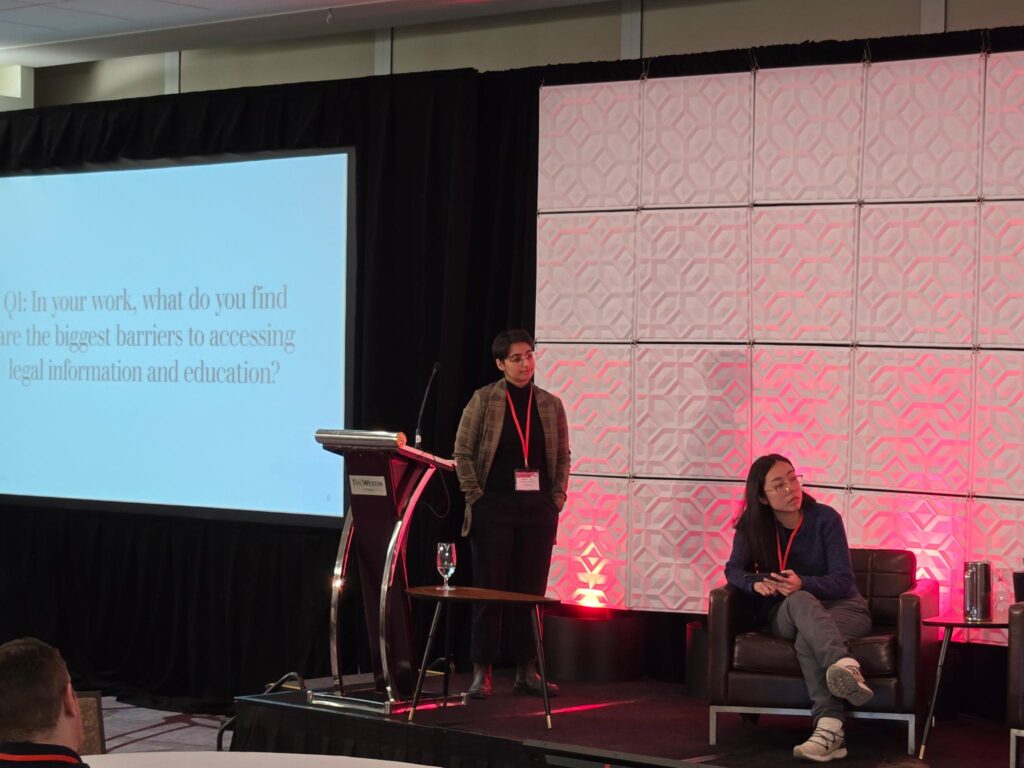
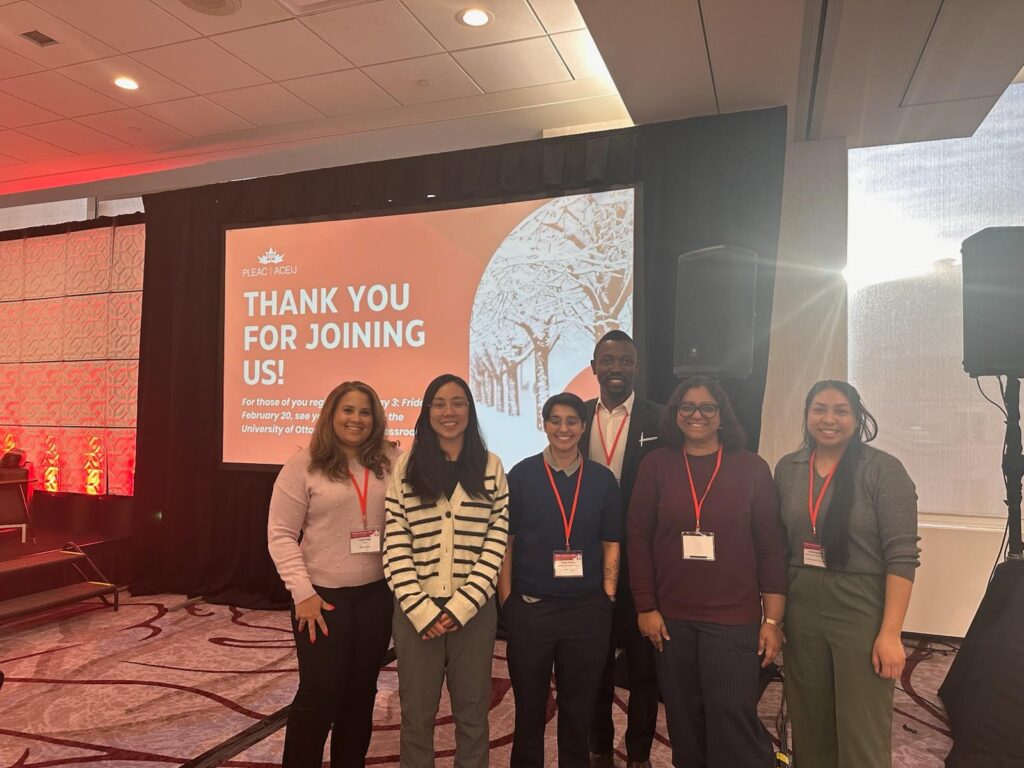
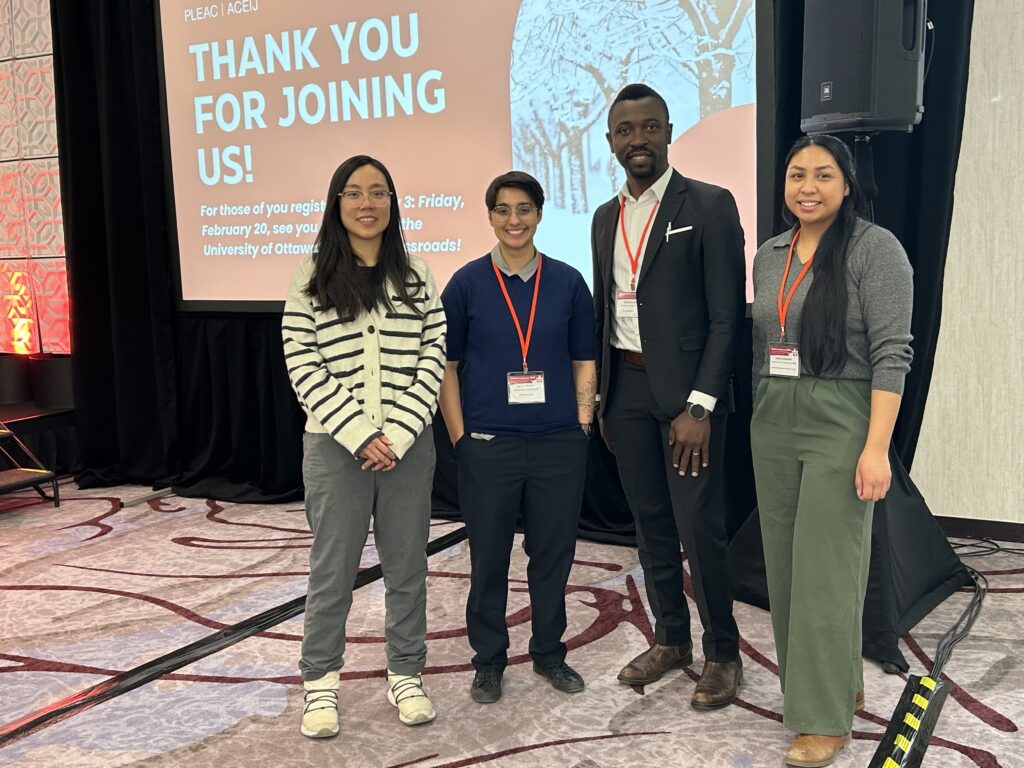
Last week, we had the privilege of attending and contributing to the PLEAC 2026 Conference in Ottawa, co-hosted by Community Legal Education Ontario and the Ontario Justice Education Network.
The PLEAC Conference is the annual national gathering hosted by the Public Legal Education Association of Canada (PLEAC), a national nonprofit organization that serves as an umbrella organization for public legal education and information (PLEI) groups across Canada. The conference aims to bring together public legal educators, legal clinic and legal aid professionals, community organizations, and academics to share knowledge, reflect, and learn together.
In York Region, nearly 47% of renter households spend 30% or more of their income on housing, according to the 2021 Census. In 2024, 878 people in York Region were experiencing homelessness, including unsheltered individuals, those in emergency shelters, and those in transitional housing. These figures show the urgent need for coordinated local supports to help residents access stable, affordable housing.
Our Community Lawyer, Ayesha Adamjee, and Outreach and Education Advisor, Jessie Tang, led a workshop on a holistic community approach to housing support in York Region, alongside Camilla Singh, Coordinator at Agincourt Community Services Association, and Michelle Sutherland, Director of Legal Services at the Community Legal Clinic of York Region. The session explored how coordinated local networks can strengthen public legal education and address housing instability.
“This workshop reminded us that collaboration is key. By connecting legal and non-legal community agencies, we can strengthen supports that help more people access safe, secure, and affordable housing in York Region,” said Ayesha and Jessie.
We would like to thank the Public Legal Education Association of Canada (PLEAC), Community Legal Education Ontario, the Ontario Justice Education Network, our workshop partners at Agincourt Community Services Association and the Community Legal Clinic of York Region, and all the participants who joined us. We are especially grateful to United Way Greater Toronto for supporting our work in York Region and enabling our team to contribute to this important conference.

Earlier this month, we were pleased to have our Director of Policy, Research, and Law Reform, Margaret Flynn, as a featured speaker at the Niagara Roundtable on Housing.
The Niagara Roundtable brings together seasoned experts and emerging leaders to foster informed dialogue and advance action on the policy, social, and economic issues shaping Canada’s future.
The roundtable brought together leading voices, including Honourable David Hickey, Minister responsible for the New Brunswick Housing Corporation; William Strange, Professor, Economic Analysis and Policy, Camrost Felcorp Chair in Urban Economics at the University of Toronto’s Rotman School of Management; and Taya Cook, Executive Vice President at Urban Capital, for a solutions-focused discussion on Canada’s housing challenges.
The discussion focused on three key areas:
– The impact of high housing costs on young people and marginalized communities
– Housing challenges in communities beyond major urban centres
– Various perspectives on more inclusive housing outcomes, including rights-based perspectives
Canada continues to face a growing housing and homelessness crisis. While the crisis affects people from all walks of life, it disproportionately impacts those already facing barriers, including Indigenous people, Black and other racialized people, 2SLGBTQ+ people, people with disabilities, seniors, women, youth, and low-income households.
Drawing on CCHR’s policy and client services work, Margaret highlighted how housing insecurity affects stability in people’s daily lives, undermining safety, health, and the ability to fully participate in their communities.
“Access to housing is fundamentally about stability. Without security of tenure, our communities cannot build the foundation they need to thrive,” said Margaret Flynn.
Building on these conversations, we remain focused on advancing the right to housing, ensuring that everyone in Canada has access to a safe, secure, and affordable home. By highlighting the real-world impacts of housing insecurity and advocating for evidence- and rights-based solutions, we aim to support stronger, more stable communities across the country.
The Canadian Centre for Housing Rights, a national nonprofit organization dedicated to advancing the right to housing and supporting tenants across Canada, has launched its search for a new Executive Director.
The posting is now available here: https://housingrightscanada.com/get-involved/join-us/work-with-us/
The Board has established a search committee to lead a comprehensive recruitment process and is seeking a leader who will build on CCHR’s mission and continue strengthening its programs, partnerships, and impact.
The Board also announces with deep gratitude the departure of outgoing Executive Director Annie Hodgins. Annie is concluding a 13-year tenure with the organization after leading a significant phase of strategic growth and development.
During Annie’s tenure at CCHR, the organization expanded from a small Ontario-based organization into a nationally recognized leader in housing rights, growing its budget five-fold, building new departments, and launching many new initiatives with national reach. Annie played a central role in this transformation, advancing the organization’s policy impact and systems-change work, strengthening community engagement and fundraising, and building institutional capacity and effectiveness.
Annie is a trusted voice in the housing sector, who has worked closely with governments, funders, and community partners to advance systemic solutions and human rights-based approaches that promote housing security for all. She is widely respected for her strategic, collaborative leadership style, her commitment to evidence-based policy, and her ability to lead organizations through periods of growth and increasing complexity.
The Board thanks Annie for her significant contributions and lasting impact on the organization and the sector and wishes her every success in her next chapter. We are confident she will continue to create significant social impact and foster a better Canada, where everyone has the right to housing.

5 Questions for Change is a monthly feature that brings you insights from the people at CCHR working on the frontlines every day to advance the right to housing.
This month, we are talking to Victoria Wan, a Lawyer from our Client Services team.
1. What are two issues you see renters struggling with most right now?
The two most common issues I see right now are Above Guideline Increase (AGI) applications and maintenance issues. I talk to tenants in Toronto due to our legal services program, but I know these two issues are common throughout Ontario.
AGI applications are based on circumstances where a landlord can apply to the Landlord and Tenant Board (LTB) to raise the rent above the guideline amount. Each year, the Ontario government sets a “rent increase guideline”, which is the percentage that a landlord is allowed to increase the rent for rent-controlled units. Rent-controlled units are defined by the Residential Tenancies Act.
Maintenance issues within the rental unit or in the building are very common as well, especially for older buildings in Toronto and in Ontario. Always document and write to your landlord when you have a complaint about a maintenance issue. If the landlord is not responding, contact the Property Standards for your municipality, which is usually the phone number 311.
2. Is there a recent case or experience that stayed with you and what did it reveal about renters’ realities?
In our current economic reality, an extreme rent increase is very difficult for renters. As I mentioned above regarding rent-controlled units, there are more and more rental units that do not have rent control. Rental units that are not rent controlled include new buildings, additions to existing buildings, and most new basement apartments that are occupied for the first time for residential purposes after November 15, 2018.
I worked on a case that involved an extremely high rent increase of $600 in one year, on top of a current monthly rent of $3,000. Because the rental home was newly constructed and rented for the first time around 2021, the landlord is legally permitted to increase the rent to any amount. Despite attempts to negotiate with the landlord, the landlord was not willing to permit a lower increase amount.
The problem is with the rent decontrol laws set by the Ontario government in 2018. If you disagree with these rent decontrol laws, talk to your Ontario Member of Provincial Parliament.
3. When you represent tenants at the LTB, what’s the most common misconception you encounter- either from renters or landlords?
When I represent tenants at the Landlord and Tenant Board, a common misconception that I see from landlords or their representatives are that tenants are trying to be “annoying” to landlords and their representatives. Standing up for your legal rights as a tenant is not “annoying.” Being able to know and enforce your tenant rights is part of advancing the human right to housing in Canada. We live in a real world, where there are real human beings and families struggle to pay rent and afford food for themselves and their family. Learn more about CCHR’s work on the right to housing in Canada here.
4. If you could offer one piece of advice to renters across the country, what would it be?
Learn your rights as a tenant in your province. Seek free legal advice on tenant rights where you can get it. Read the municipal and provincial websites with the summaries on your rights as a tenant. CCHR has a resource for renters facing eviction for each province and territory in Canada here: Resources for renters facing eviction – Canadian Centre for Housing Rights.
If you are lucky to have secure and safe housing, try to support other tenants who are facing difficult challenges.
5. What drives you to do the work you do at CCHR?
I really do admire and appreciate my coworkers at CCHR, and I am inspired by the work they do to advance good housing policies and recommendations at every level of government. I am also driven by supporting affordable housing, and learning and working to find better solutions for renters in Ontario, and across the country. I hope to help in advancing the work for every Canadian to know that housing is a human right recognized by the United Nations.
Note: The information provided in this message is legal information only. It is not legal advice and is not a substitute for legal advice. If you require legal advice, please contact CCHR’s Legal Services team, a lawyer, or your local community Legal Aid clinic.

5 Questions for Change is a monthly feature that brings you insights from the people at CCHR working on the frontlines every day to advance the right to housing.
This month, we are talking to Rose Vandermeer, Senior Engagement and Education Advisor.

On November 24, 2025, Bill 60 was passed in Ontario, changing 16 laws, including the Residential Tenancies Act (RTA). The changes made to the RTA apply only to applications made after Bill 60 comes into force. As of December 18, 2025, the changes to the RTA were not yet in effect.
The following highlights some, but not all, of the expected changes under Bill 60.
When your landlord claims you owe rent, there is a “grace period” of 14 days during which a landlord cannot file to evict you. Under Bill 60, it is shortened to 7 days. This means that if your landlord gives you an N4 form for non-payment of rent, you have only 7 days to pay before an eviction application can be filed with the Landlord and Tenant Board (LTB).
During your eviction hearing for unpaid rent, you can raise issues that you could have included in your own application to the LTB, such as if your landlord has failed to do maintenance. However, under Bill 60, you must pay 50% of the money your landlord claims you owe before the hearing to be allowed to raise these issues.
When you or your landlord disagree with an LTB order, you have 30 days to request that the LTB review their decision. Under Bill 60, requests to review must be submitted within 15 days of the decision or order. However, if the LTB considers it “just and appropriate in the circumstances to extend the time to request the review,” the LTB still has the power to give more time.
If your landlord gave you an N12 notice because they or their family need the unit to live in, they had to pay you one month’s rent as compensation, regardless of how much notice they gave. Under Bill 60, if the termination date on the N12 notice is at least 120 days after the notice is given, your landlord does not have to pay this compensation.
While other changes may come in the future, importantly, the following two protections still apply:
Your rent can only be increased once every 12 months with 90 days’ notice. For properties first occupied before November 15, 2018, your landlord is not allowed to increase the rent more than the province’s annual guideline amount unless they apply for an Above the Guideline Increase.
Tenancies still automatically continue month to month once the initial lease period ends. This means once the lease period ends, you are not required to move out or renew the lease, and your original lease terms continue.
For more information about your rights under Bill 60, please contact our tenant services team.

5 Questions for Change is a monthly feature that brings you insights from the people at CCHR working on the frontlines every day to advance the right to housing.
This month, we are talking to Julie Matheson, a Lawyer from our Client Services team.
Lorem ipsum dolor sit amet, consetetur sadipscing elitr, sed diam nonumy eirmod tempor invidunt ut labore et dolore magna aliquyam erat, sed diam voluptua. At vero eos et accusam et justo duo dolores et ea rebum. Stet clita kasd gubergren, no sea takimata sanctus est Lorem ipsum dolor sit amet.
Lorem ipsum dolor sit amet, consetetur sadipscing elitr, sed diam nonumy eirmod tempor invidunt ut labore et dolore magna aliquyam erat, sed diam voluptua. At vero eos et accusam et justo duo dolores et ea rebum. Stet clita kasd gubergren, no sea takimata sanctus est Lorem ipsum dolor sit amet.
Lorem ipsum dolor sit amet, consetetur sadipscing elitr, sed diam nonumy eirmod tempor invidunt ut labore et dolore magna aliquyam erat, sed diam voluptua. At vero eos et accusam et justo duo dolores et ea rebum. Stet clita kasd gubergren, no sea takimata sanctus est Lorem ipsum dolor sit amet.
Lorem ipsum dolor sit amet, consetetur sadipscing elitr, sed diam nonumy eirmod tempor invidunt ut labore et dolore magna aliquyam erat, sed diam voluptua. At vero eos et accusam et justo duo dolores et ea rebum. Stet clita kasd gubergren, no sea takimata sanctus est Lorem ipsum dolor sit amet.
Lorem ipsum dolor sit amet, consetetur sadipscing elitr, sed diam nonumy eirmod tempor invidunt ut labore et dolore magna aliquyam erat, sed diam voluptua. At vero eos et accusam et justo duo dolores et ea rebum. Stet clita kasd gubergren, no sea takimata sanctus est Lorem ipsum dolor sit amet.
Lorem ipsum dolor sit amet, consetetur sadipscing elitr, sed diam nonumy eirmod tempor invidunt ut labore et dolore magna aliquyam erat, sed diam voluptua. At vero eos et accusam et justo duo dolores et ea rebum. Stet clita kasd gubergren, no sea takimata sanctus est Lorem ipsum dolor sit amet.
Lorem ipsum dolor sit amet, consetetur sadipscing elitr, sed diam nonumy eirmod tempor invidunt ut labore et dolore magna aliquyam erat, sed diam voluptua. At vero eos et accusam et justo duo dolores et ea rebum. Stet clita kasd gubergren, no sea takimata sanctus est Lorem ipsum dolor sit amet.
Lorem ipsum dolor sit amet, consetetur sadipscing elitr, sed diam nonumy eirmod tempor invidunt ut labore et dolore magna aliquyam erat, sed diam voluptua. At vero eos et accusam et justo duo dolores et ea rebum. Stet clita kasd gubergren, no sea takimata sanctus est Lorem ipsum dolor sit amet.
Lorem ipsum dolor sit amet, consetetur sadipscing elitr, sed diam nonumy eirmod tempor invidunt ut labore et dolore magna aliquyam erat, sed diam voluptua. At vero eos et accusam et justo duo dolores et ea rebum. Stet clita kasd gubergren, no sea takimata sanctus est Lorem ipsum dolor sit amet.
Lorem ipsum dolor sit amet, consetetur sadipscing elitr, sed diam nonumy eirmod tempor invidunt ut labore et dolore magna aliquyam erat, sed diam voluptua. At vero eos et accusam et justo duo dolores et ea rebum. Stet clita kasd gubergren, no sea takimata sanctus est Lorem ipsum dolor sit amet.