The Canadian Centre for Housing Rights is proud to offer an innovative model that delivers rights-based educational training to supportive housing providers, frontline workers, peer supporters, and renters.

When renters who live in supportive housing know their legal rights, and supportive housing providers have the legal know-how to uphold those rights, together they build healthier and more resilient communities.
We offer the following two training and capacity-building models to introduce renters and supportive housing providers to the right to housing framework and rental housing laws:
Read about the human rights impact of this project.
Stories of discrimination in rental housing are far too common in Canada. Many advocates have long pointed to discrimination in housing as a systemic issue caused by patterns of behavior, policies or practices that are a part of the structures of our society which put certain groups at a disadvantage.
What does systemic discrimination in housing look like in practice? From passive aggressive comments to discriminatory housing posts, three women share their stories about their challenges finding and maintaining safe and accessible housing in the Greater Toronto Area (GTA).

Dorrett White is a wife, mother, and working actor who has had roles on several shows, including The Boys, What We Do in the Shadows, and Self Made: Inspired by the Life of Madam C.J. Walker.
White remembers first experiencing discrimination in housing when her and her now-husband were looking for a place to rent in the Beaches neighbourhood where they could grow into as a family. White is Black and her husband is Latino. Though they looked good on paper – her credit was great and his job paid more than minimum wage – they endured what seemed like endless rejection.
“Every landlord that we went to, they would tell us, ‘alright we’ll take your information and we will give you a call back’ and we never heard from any of them,” White said. “Even when we offered personal references, a number of employment letters, and people who could vouch for us, we would still never hear back. And we would always get told and reminded that ‘parties can’t happen here’ or not to invite too many people over. I’m not sure what that was about but that was a common thread in every single landlord we met on that journey.”
After a long search, White and her husband were accepted for a one-bedroom apartment, but they would soon find themselves on a difficult rental search again.
For Jasmine Jennings, a 24-year-old former youth in care and crown ward about to embark a Bachelor of Social Work, the challenge of finding suitable housing began when she turned 18.
“For a lot of youth in care, turning 18 is nothing to be excited about and the only gift you are guaranteed on this day is abandonment,” Jennings shared. “While other 17-year-olds around me were focused on finding the perfect prom dress or walking across the stage, I was thinking about homelessness.”
Jennings said that time spent in care often leads to a belief “that putting up with abuse, mistreatment, or just generally being uncomfortable is something that I have to do.” The belief that she did not deserve safe and stable housing was with her when she started to look for a place to rent after being released from foster care.
There were other challenges facing her, as well.
“I am disabled and Black, and I am a woman of low income, so it feels like all of the odds are stacked against me,” she said.
“Because I am disabled, my income is ODSP. And a lot of times, landlords do not want to accept someone who is disabled. In fact, in a lot of housing postings, you’ll see ‘job letter or recent paystubs required’ and this usually leaves me living in spaces that aren’t safe and don’t meet my accommodations,” Jennings shared. “I have had knives pulled on me, I have had inappropriate sexual advances. I’ve been locked out. I have been told that I have to be home at 10:00 p.m. I have paid money in cash then been told that I haven’t paid, so I had to pay double. So, being left to live in spaces that aren’t safe has been really challenging.
White also found herself renting an apartment that she did not feel comfortable with due to discrimination in her rental search.
After enjoying their apartment in the Beaches neighbourhood for a couple of years, White and her husband sought to find a bigger place after having a daughter. Realizing that the Beaches would be too expensive for their budget, they decided to try looking in Scarborough. While Scarborough had more apartments in their budget, it was still difficult for them to find a landlord willing to rent to them.
“We thought it would be easier to look for an apartment as a family, but funnily enough, it felt like it was much harder,” White said. Instead of being told, ‘Oh, we don’t know if you can afford this place,’ we would be told things like ‘Oh, this one-bedroom or this two-bedroom might not actually work for your family’ or ‘no children allowed here.’ ”
After “months and months” of searching, they eventually found someone that would rent to them. Though there were some red flags, such as the landlord only accepting cash as rent payment, they took the place.
“Out of desperation, we decided okay, this guy said we could come in, so let’s go. That ended up being one of the biggest mistakes we ever made,” White said.
Sheila Warner is Gitxsan, a member of the wolf clan, and her spirit name is May-may-zey May-ga-zay, Eagle from all Directions. She is a licensed paralegal with Aboriginal Legal Services, working primarily in eviction prevention.
One major housing issue that Warner sees with the community she serves – low-income Indigenous people in Toronto – is related to Rent-Geared-to-Income (RGI) and the idea of being incorrectly identified as overhoused.
“If a family has a two-bedroom apartment or a three-bedroom apartment and CAS [Children’s Aid Society] apprehends one or two children then that tenant is suddenly overhoused and they try and evict them for that,” Warner explained. “However, in order to get their child back, CAS requires that they have a bedroom for each child that are of the opposite sex or if it’s the same sex there is only so many years they can be apart to share a bedroom. So, then your housing is at risk, your children are gone, and now you have no way to get them back because they are not going to give them back unless you have that housing.”
While she advocates for her clients regularly, Warner said that she finds it challenging to advocate for herself as she also faces discrimination in her housing.
“I am experiencing it this week with my own landlord,” she said. “I have lived in this place for almost 10 years, so my rent is significantly lower than what market rent is right now. The upstairs tenants have just moved out, so he has in turn started harassing me and yelling at me. He doesn’t talk to me, he screams at me, and he seems to think that this is okay.”
Recently, while her landlord was yelling at her for letting a neighbour park in her parking space, Warner told him and his wife that instead of being concerned about a minor parking issue, they should look at the mould in her bathroom that she has been asking them to take care of for years. Warner says that the landlord’s wife turned to her and told her that if she had a problem with the mould, she could move out.
“I know my rights and I can professionally defend myself, but it is so stressful that I can’t,” Warner said. “I am dealing with other people’s housing stuff all day that when it comes to dealing with my own, I end up putting up with it. And also, it is cheap rent, so I let them push me around.”
White, the actor and mother, also reports being treated poorly by one landlord.
After leaving the apartment in Scarborough, her and her family ended up renting an apartment from White’s old college professor. They loved the apartment, but the landlord of the building made it difficult for them to enjoy their stay.
“He would make rude comments to us under his breath. He wouldn’t greet us like he would greet all the other tenants…And if he did talk to us, it was in a really stern, angry, aggressive voice,” White said.
While the three women felt frustrated and disappointed by their experiences trying to rent an apartment in the GTA, they expressed optimism that things can get better for racialized and low-income renters.
White hopes that discussions like the one at the workshop “can lead to changes and reforms and maybe a bit more ruling for private landlords in terms of how they choose who they are renting to.”
The Aboriginal Legal Services, where Warner works, has recently begun offering an Indigenous circle where people from all backgrounds can go to engage in alternative dispute resolution.
“I think when people sit down and they discuss with their landlord what is happening and they can tell their side of the story, the landlord is forced to see them as a person and not a name and number on a file in their office, and that is really beneficial,” Warner said.
For Jennings, as a former youth in care who is now immersed in social justice work, “it is important to me that a worker understands the systemic nature of homelessness and implements anti-oppression practices whenever possible. It is important that a supporter understands the child welfare system, the realities of youth from care.…And finally, it is important that a supporter is culturally competent and how my race impacts the likelihood of securing safe housing,” she said.
“I don’t think that stable housing is a want. I think it is a need and is a social determinant of health,” she added. “It is my hope that youth who age out of the system can experience safety and what it feels like to be home.”
These stories from Dorrett, Jasmine and Sheila were first shared during a workshop on systemic discrimination in housing that took place on July 6, 2021. The workshop was organized by CCHR and the Right to Housing Toronto as part of a virtual workshop series that addresses the critical challenges in advancing the right to housing.

As an immigrant, a survivor of domestic abuse, and a formerly unhoused person, Dankwa’s journey has neither been easy nor linear. She wants to share her lived experience because “there are so many other people that nobody will ever know their story, but they are dying on the street. A lot of voices are not being heard and I’ve been through so much that keeping it to myself is not going to help.”
Dankwa came to Canada to escape an abusive relationship in New York where she felt her pleas for help were not being taken seriously enough.
“I felt like I wasn’t getting the support that I needed,” she says. “My children and I were not safe at all, so I did what I had to do to protect me and my children.”
After arriving in Ontario, Dankwa ended up at a shelter. She describes her time there as challenging, with a lack of trust between the women staying there and the shelter staff.
“The shelter is a good place in an emergency. It should be just emergency services,” she says. “I should be staying in that shelter not more than two to three weeks and then should be put in a house or apartment. We need homes. We don’t need to put so much money in the shelters. No abused women with children should stay in a shelter for more than a month because then it becomes another mental health issue to deal with in that place.”
At her shelter, Danka says she did not receive the appropriate transitional support and was instead kicked out for overstaying.
“A shelter is where you’re supposed to get the legal services, where you get all the support that you are supposed to get, but in my case, that was not there. In my case, I had to leave because I had overstayed and when I said no, I was literally kicked out and my stuff was thrown out in a plastic bag.”
After leaving the shelter, Dankwa bounced around different places.
“I was couch surfing. I will go to this person’s place for a week [then] that person’s place for a week and sleep on their couch. I’ll go take a shower here then I will go somewhere else the next day and stay there for a little bit until I get my work money then I can stay in a motel. When that money runs out, I go back on the street and try to figure out what friend will take me in for the night.”
After bouncing around for months, she finally found a one-bedroom basement apartment that she could afford.
However, her joy at finding housing for the first time since fleeing her abusive relationship was short-lived.
“What I didn’t know was that it was another nightmare that I was going to face,” she says.
Dankwa’s new landlord lived above her and had strict rules around what Dankwa could or could not do.
“She told me that when I go out, I have to come home at a certain time or I shouldn’t come in. I should stay outside,” Dankwa says. “So, when I go out and it’s past 10:00 o’clock, I have to sleep on somebody’s couch again.”
Dankwa was also not allowed to have friends over in her apartment. If someone wanted to visit her, they had to sit in her landlord’s living room while the landlord was there.
After a friend came over one day at a pre-planned time and the landlord asked her to reschedule because she wanted to go out, Dankwa had had enough.
“I didn’t know where I was gonna go, but I said to myself ‘If I have left that man in the United States and have come all the way and stayed in the shelter where I’ve been kicked out of, there is nothing else that I can’t deal with.”

And with that, Dankwa was homeless again.
“I remember Thanksgiving. It was the saddest Thanksgiving ever,” Dankwa recalls. “I was always the person cooking Thanksgiving, everybody coming to my home. I had a huge house, it was beautiful. I worked so hard for that place. And Thanksgiving came and I was homeless.”
After a couple of months, Dankwa found another basement apartment that she could afford in Peel Region; this one without a kitchen, fridge, or microwave.
The first night, she slept on the floor with no comforter. The second day, while a friend drove her to find some supplies, they were hit by another vehicle.
Being an immigrant with no permanent resident card at the time, Dankwa was too scared to go to the hospital.
“I started having anxiety attacks and depression,” she says. “When a woman is running from abuse, we should not look at the nationality or the country that they are coming from in order to provide them [with support], we should look at them as a human being. As a woman who needs help, that is it.”
Dankwa stayed in the basement apartment “hoping that the kitchen would be done,” she says. “That did not happen.”
Dankwa says she explored different avenues for help with finding suitable and stable housing, but was rebuffed at every turn, in part due to her immigration status.
“After a while, I started moving again,” Dankwa says.
“The road to finding a place has not been easy. Throughout, I encountered landlords that would like to take advantage of me in every way they can knowing my situation. But one thing that I said to myself after what I experienced with my ex-husband and what I experienced in the shelter, is that there’s things I won’t entertain anymore. I would rather be on the street and be happy than giving money to somebody to abuse me.”
While Dankwa has now found more stable housing, she still fears that it could all be taken away.
“When it comes to women’s homelessness, we need more special attention,” she says.
“I’m not saying other people don’t need special attention, but most of the time, it is women leaving abusers and a lot of them will take their children with them, so it is not as easy for women to stay in the shelter or on the streets,” she explains.
“We live in a world where we are always trying to help other people from different places, but we have women here going through abuse who don’t even have a home to stay. And sometimes people think that we have the systems in place…but the programs and the systems are not set up to actually provide adequate housing, and so the woman ends up back with the abuser or on the street.”
For Dankwa, a large part of the issue with women’s homelessness is that there is a lack of understanding by the vast majority of the population. “People get judgmental because they have not been in our shoes,” she says.
“If I can use that energy that I have, that anger, that strength, to let people know [what homeless people] are going through then somebody might listen. Somebody might read the story somewhere. Somebody might have the passion to even advocate. And this is the way that I can help somebody else.”

Janine Harvey lives in Ulukhaktok, a community of less than 450 people in the Beaufort Delta Region of the Northwest Territories.
At the time of this interview, her community has no internet service and so we speak over the phone instead of the now ubiquitous Zoom.
Harvey is a mother, wife, an advocate, and a supporter of Inuit culture. She describes Ulukhaktok as a “very cultural community; lots of hunting and fishing, craft making and artists.”
That culture is part of what led her back there after decades away.
“I wanted to be part of my culture again,” she says.
Harvey grew up in Ulukhaktok, but moved to Yellowknife when she was 19.
In Yellowknife, she began her career as a support worker with the YWCA, working at a women’s shelter called the Alison McAteer House.
“I worked there for five and a half years and during my time there, I would say maybe 90 percent of the women and children that were fleeing family violence were Indigenous or Inuit,” she says. “And I thought there was a need for more workers that are Indigenous because we have this connection. I thought I could bring a lot of different things to the table because I am helping my own people and they trust me.”
Harvey says she was drawn to the work at the shelter because of her own lived experience.
“I am a victim of sexual assault, and I am a victim of a kidnapping. With the trauma that I’ve endured myself, I decided I wanted to help other people,” she says. “I decided I wanted to make sure that women had a safe place to go…I wanted to be an advocate for a lot of women that were facing family violence or that didn’t have a home. Then it just became bigger.”
After the YWCA, Harvey started working at the Women’s Society in Yellowknife.
“With the help of the Women’s Society, me and my colleague Lauren started the Housing First program from the ground up,” she says. “That program opened my eyes to another area of vulnerable people: people who were homeless and had nowhere to go, who were sleeping outside in -30 weather.
“I thought ‘this is not right’ then ‘there’s more that I could do’, so I started working with the people that were experiencing homelessness. I started asking what they wanted to do and what they needed to do instead of me telling them.”
What she heard from a lot of people in the program, Harvey says, was that they simply needed non-judgmental support.
“There’s a lot of stigma towards homelessness. So, a lot of the people that I worked with asked ‘can you come with me to a meeting?’ or ‘can you come with me to Walmart because they’re not gonna let me in?’” Harvey says. “So, I found a lot of what we did was just to help empower the participants and to help reconnect them to society by going with them to meetings, to buy groceries, making sure they weren’t getting bad treatment from service workers or the public and just really helping them build their confidence.”
Harvey believes that “housing is a right and everyone deserves a home, no matter who you are, or where you are from” and says that the government is not doing enough to address the housing crisis and poverty in the North.
“I advocate because I see how my people are living in the poorest housing for the highest rent. They are living in these units, where some of them have no doors or there’s mould in the kitchen or their floors need to be replaced, and there’s no renovation because they don’t have the materials and there are not enough workers to do maintenance and repairs. A lot of people in the Northwest Territories and Nunavut live in really poor conditions for a really high cost of living.”
To push for change, Harvey sits on her local council, the Pan-Canadian Voice for Women’s Housing and the Steering Committee of the National Right to Housing Network.
“The government hasn’t taken action on ending poverty as much as I would like to see, and they haven’t moved forward on housing for years and years,” she says.
Because her community is under-resourced, Harvey’s work is currently unpaid.
“Everything I am doing now is as a volunteer,” she says. “My drive comes from hearing the really horrible stories that people have had to go through. The money doesn’t even matter, I am just going to keep fighting for you because what is happening is not right.”
Harvey’s return to Ulukhaktok has also been about healing.
“I went to Yellowknife for school, but I left my community due to family violence. I didn’t want to go back home because I felt judged and labelled and that I did wrong,” she explains. “The guy who had assaulted me when I was a teenager, I was one of the first people in my community to charge them for sexual assault. And the guy that kidnapped me got five years in jail, but it was really hard for me to move past all that.
“After some time in Yellowknife, after my kidnapping, I was an alcoholic. For a couple years. I drank my pain away. And everybody would say that I should go to a treatment centre, but I knew in my heart and in my head that I didn’t want to go to treatment because I couldn’t face being locked up, which a lot of people face up here. I now advocate for culturally appropriate treatment for our people, and for me, I knew I wanted to do my healing on the land in my own cultural ways.”
In Ulukhaktok, Harvey says she has gotten to “learn my Inuit way and reconnect with the land, my ancestors, and God, and have found forgiveness.”
She says she is hopeful that things will change and get better for her community.
“I believe that if I keep doing the work that I am doing, somebody might listen. Somebody in government might take action and give us more money for housing, for free lunches for children,” she says.
“I try and speak up and if someone hears me and has the passion that I have, they, too, can help end homelessness.”
Janine Harvey was one of the panelists at CCHR and the National Right to Housing’s workshop, “Claiming the Right to Housing in the North through the National Housing Strategy Act”, held in September 2021. The workshop is part of an ongoing series of regional workshops with local partners across Canada.

Being evicted from one’s home can irrevocably change their life. It can mean not just losing housing, but losing stability, losing community, and in some cases, losing one’s sense of self-worth.
CCHR and Right to Housing Toronto (R2HTO) recently held a workshop to discuss evictions and the right to housing. To understand the impact of evictions during the pandemic from the ground up, we spoke with three lawyers who assist tenants facing evictions about the cases they see most often, the pandemic’s effect on tenants, and some of the client stories that have stayed with them.
Melissa Bramson and Ryan Hardy are both with the Tenant Duty Counsel Program (TDCP), a program of the Advocacy Centre for Tenants Ontario funded by Legal Aid Ontario. TDCP are a group of lawyers and community legal workers who help tenants facing a hearing at the Landlord and Tenant Board (LTB) by providing basic legal advice, helping to work out settlements with landlords, and reviewing and helping fill out some forms and documents, especially those related to eviction.
Bramson is the full-time tenant duty counsel in Ottawa based out of Community Legal Services of Ottawa, and Hardy is the supervisor for the Tenant Duty Counsel in Toronto and the Peel region. Both Bramson and Hardy say that most of the requests they get for help from tenants facing eviction are related to rent arrears, where the tenant was unable to pay their rent in full.
“I think a lot of my team would tell you it feels like we’re getting a narrower range of issues that we talk to people about,” Hardy says. “People in the pre-pandemic era would come in with all kinds of situations, just a wider range of things and problems that they were dealing with. It definitely feels like it’s narrowed a bit, and so arrears are first and foremost and it really kind of dominates.”
While rent arrears have always made up a large percentage of reasons that landlords file for eviction, the COVID-19 pandemic has resulted in many people losing their income and therefore unable to pay all their rent.
“Recently, a large majority of people who are in arrears are people who lost their job because of COVID. You know CERB came through for a little bit, but maybe didn’t cover the same amount that they were used to. So, there’s a whole new group of people that are now in arrears,” Bramson says. This situation is especially true for those living in some of Canada’s most unaffordable cities to live as a renter, such as Toronto or Ottawa.
Yodit Edemariam is the director of legal services at Rexdale Community Legal Clinic, a non-profit legal clinic that serves people who are living on low incomes in the northwest of Toronto.
Edemariam says she has also seen the pandemic’s impact on people’s ability to pay their rent.
“People have had to make impossible choices about going to unsafe work versus trying to keep up with their rent and we have seen arrears across the province at levels that I have never seen in my career.”
The large number of arrears cases currently at the LTB may not just be due to people’s inability to pay their rent in full, but also due to the kinds of applications that the LTB seem to be prioritizing.
“There’s a huge volume of non-payment of rent cases that are being heard at the Board. I can see that based on the file numbers,” says Bramson. “For example, you have a number like EAL-12345-21, meaning that the landlord filed that application in 2021. So, I can see that all of the L1 non-payment of rent cases are from 2021, and I would say in comparison, the tenant applications for things like maintenance and repair, the majority of those that are on our docket are from 2019 and 2020, so it’s very clear what the LTB‘s priority is.”
Hardy says he has seen a similar trend.
“The tenant applications are a small fraction of what the Board is doing,” he says. “It’s a lot more work for most tenants to do their applications successfully, so it’s always been skewed, but it feels more dramatic now, and some of that is the Board scheduling.”
Tenant applications at the LTB can be related to a landlord who is neglecting the rental unit and not doing repairs, it can be related to a major appliance that is not working like a fridge, or harassment issues that tenants are facing by their landlord or representatives, just to name a few.
“I spoke to a gentleman just last week who had filed a pair of tenant applications in November. He was still waiting for his hearing, but his landlord’s hearing for eviction for arrears had been scheduled just in a couple of months,” Hardy says. “So, even though he had filed first, he was waiting much longer to get heard.”
Due to the COVID-19 pandemic and public health guidelines, the LTB moved hearings online in March 2020. This has created challenges for some tenants, such as those who do not have access to a computer or reliable connection, those who are not comfortable with technology or those with language barriers.
“I have to do a lot of explaining to people on how to sign in [to the hearing]. People saying ‘I got this link but what does it mean?’” Bramson says. “Over the weekend, I got an email from a tenant who I had sent a PDF document to fill in and she said she didn’t know how to fill it in. This is something that we wouldn’t have dealt with before because we would tell her to go get a physical copy at the counter, but the counters are closed. “
Hardy says having hearings online also makes it challenging to provide the best advice to tenants.
“We provide legal advice and the advice will focus on different ways of trying to defend against the arrears application,” Hardy says. “If there’s technical defects in the landlord’s application, we’re going to try to talk about that. That’s something that’s a lot harder to do these days than it was because before usually people would be sitting there with their documents that you could look over. It’s much more difficult to do that now.”
With the online hearings “tenants and tenant duty counsel are at a huge disadvantage by not having that paperwork,” Bramson says. “And then the landlord’s the person who filed it, so they would have that paperwork and already have the products that they need, which makes it an unfair disadvantage right at the beginning.”
The cases that go in front of the LTB all have a letter and a number attached to them; Bramson referred to a hypothetical EAL-12345-21, which could be an application to evict a tenant for non-payment of rent and to collect rent that the tenant owes. Behind these application numbers lie real individuals with their own stories and journeys.
Hardy, who came back to working at the Tenant Duty Counsel in November 2020 after some time off, says the scale of arrears that people were dealing with made an impact on him.
“Seeing what people were up against was really shocking. There were so many people who had fallen victim to the pandemic/lockdown in different ways. People whose entire industries had ceased to function,” he says. “I spoke to a guy who was a tattoo artist, working independently, making good money and getting to do something creative, and then it was just done.”
Bramson thinks of tenants who are disadvantaged by eviction hearings moving online.
“I had a tenant who didn’t know how to submit her evidence in one email. I tried to talk her through it with my tech hat on and I said instead of sending one document at a time, you can attach six attachments to one email, but she didn’t know how to do it,” Bramson recalls.
“At the hearing, [the tenant] apologized to the [LTB] member, and for one reason or another, the matter was adjourned, and the member said to her, ‘at the next hearing, organize yourself because if I get multiple emails like this again, we might be talking about costs.’ So, costs are not to be confused with an administrative fine, but it’s something where if someone’s conduct was unreasonable, then the Board can award costs as a penalty. [The member] was saying it was unreasonable that the tenant didn’t know how to attach documents which is something that stuck out to me because she just didn’t understand the process.”
Edemariam, with the Rexdale Community Legal Clinic, says she thinks a lot about poverty and choice when it comes to her clients.
“I think from the Landlord and Tenant Board or the powers that be that there is a real misunderstanding of how people are living. I’ve seen clients’ bank statements, and that’s been one of the most profound experiences I’ve had in my career,” she says. “I think a lot about what poverty does in terms of where people live. I think sometimes people might ask our clients, ‘so why do you stay if there’s like a horrible mouse infestation and the landlord isn’t doing anything.’ And then they’re like ‘where am I gonna go? Where am I going to find a three-bedroom for this amount? So, the things people tolerate because of a lack of choice really sticks with me.”
Edemariam says she also thinks about the pride that her clients have about their communities and the importance of maintaining that community.
“I think there’s a lot of discourse here in social housing like ‘we’ve given you this extraordinary thing for cheap so you just basically take whatever it’s given’, but we see people building their own communities even when they’re told so many distressing narratives about the communities in which they live.”
The importance of community and helping people stay in their homes is also something that Bramson thinks about.
“No one is ever evicted into a more beneficial situation than they were in,” she says.
For Edemariam, something that her colleague once said has stuck with her.
“My colleague said that everything she’s been able to do in her life is because she had a safe place to live. And I think that’s a common theme throughout our work: how does anyone deal with anything in their lives unless there is an affordable and safe place to do so?”

June 15, 2021
Like many people, Priscilla Johnstone did not always know what kind of work she wanted to do when she got older. As a child, she dreamt about being a cop. As a young adult, she worked in the health sector. Now, she works as the Homelessness Action Plan Manager at the Saskatoon Housing Initiative Partnership (SHIP). While her current job is not where she thought she would end up, in many ways, her previous work experience and her lived experience make her the ideal person for the work that she is now doing.
Johnstone joined SHIP, an organization that provides consultation, research services, and front-line support to groups developing affordable housing, in September 2020. At SHIP, Johnstone is working on the implementation of coordinated access and the Homeless Individuals and Families Information System (HIFIS), which is part of the federal government’s Reaching Home homelessness strategy program.
Reaching Home was designed to support the goals of the federal government’s National Housing Strategy, which was introduced in 2017 with the aim of advancing the right to housing and addressing a range of housing needs, from shelters and community housing to affordable rental and homeownership.
A large part of Johnstone’s job is making sure that SHIP’s work has an Indigenous lens. In Saskatoon, this is particularly important.
In the 2018 Point-in-Time Homelessness Count, 85.5 percent of the homeless population identified as Indigenous.
“Because the Indigenous homeless population is so high, we want to be able to focus on and come from an Indigenous lens and an Indigenous perspective on why some of those issues are recurring,” Johnstone says. “Basically, I want to be able to provide insight into the historical reasons as to why there are a lot of reasons surrounding homelessness for Indigenous people.”
Johnstone works closely with Derek Rope from Medicine Rope Strategies in Saskatoon. Together, they have worked with survivors from residential schools – a group of more than 90 from Saskatoon and the surrounding area – on “the best way to engage Indigenous elders and knowledge keepers on how to tackle the housing issues,” she says.
“There is a lot of talk about Indigenous inclusion and [coming at things] from an Indigenous lens and collaboration moving forward, but there is difficulty in the sense as to what is the appropriate way to have engagement,” she says. “Here in Saskatoon, we have multiple demographics of Indigenous people; we have First Nations, we have Métis, and some Inuit. Because those different values and views come into place, there needs to be more of a collaboration piece moving forward, so that all voices are heard.”
Johnstone is working to bring forth an Indigenous framework for Indigenous inclusion following the recommendations of the Truth and Reconciliation Commission, the United Nations Declaration on the Rights of Indigenous Peoples, and the recommendations from the Missing and Murdered Indigenous Women Inquiry.
“When I think of the magnitude of that stuff, it’s enormous,” Johnstone says.
Still, because of her own experience, she remains hopeful.
Johnstone’s mother went to a residential school. Her father went to a day school.
“Our family had a lot of domestic violence and alcoholism in my younger years. In my childhood we spent a lot of time running from shelter to shelter because of the domestic violence situation that had occurred in my home,” Johnstone shares. “We moved around all the time, from on reserve to urban settings. Back and forth, back and forth.”
Johnstone’s “saving grace”, she says, was that “because of my experience with my mom going back and forth to shelters and talking to counsellors, at a young age, I started reaching out to guidance counsellors. So, I learned how to build those mechanisms of support and how to navigate through those traumas and addictions and violence in the home and to move past it.”
Breaking cycles of trauma, however, is hard, and it took some starts and stops, Johnstone admits.
“I was a teenage mom. I dropped out of high school in Grade 10. I had my first child when I was 17. Single mom,” she says. “I really struggled.”
She credits a work placement program for helping her turn around her life for good. Through the program, she got her GED and started working as a practicum student in the health sector, eventually working there for 10 years.

After completing her diploma in addictions, she came across a mentorship opportunity with the Regina Police Service for Indigenous people to learn about policing through a two-week trial and decided to apply on a whim.
“I wasn’t even there for like three days and I was like ‘absolutely, I want to do this,’” she says.
That two-week trial led to a nine-year career in the police services.
“When I was a kid, I always wanted to be a police officer,” she explains. “But I gave up on that because I didn’t finish school and because I was a teenage mom, so I thought that would never happen for me.”
Working as a police officer had a huge impact on Johnstone.
“I worked in an urban setting for policing, as well as a First Nations setting. I saw first-hand human beings at their worst, and the biggest things that I saw were issues of social injustices that create addictions and just how everything kind of perpetuates itself. Most crimes happen because of lack of,” she says.
“Those values and beliefs that I have learned from that policing perspective, as well as when I worked in health, those are the foundations that have helped me in regard to the work that I am doing right now because I have that complete understanding of how those situations impact individuals and families,” Johnstone says. “And my goal is just to be an advocate moving forward. So, that is what makes me hopeful.”
Johnstone is also buoyed by the increasing openness of the federal government to engage with Indigenous Peoples.
Reaching Home, the federal program that supports Johnstone’s work at SHIP, specifically speaks about the government’s commitment to “achieving reconciliation with Indigenous peoples” by “engaging with National Indigenous Organizations and Indigenous service providers” and working together to develop an approach on how to allocate funding, which is a great start.
“Our government has brought the conversations back to the community level of First Nations people, as well as Inuit and Métis to have a voice, so that in and of itself makes me hopeful. That they are willing to listen, they are willing to work with, they are willing to walk with…” says Johnstone.

While Johnstone feels that the government has made progress in how it engages with Indigenous people, she says that more can be done at all levels of government. The COVID-19 pandemic has exacerbated the Indigenous housing crisis as people struggle with unexpected job loss and ongoing housing unaffordability. Indigenous advocates and supporters are calling on the federal government to provide long-term funding for an Urban Indigenous Housing Strategy created by Indigenous people for Indigenous people living in cities.
Johnstone hopes that as “Indigenous cultures and ways of knowing are slowly starting to make their way” into Western approaches, that we also learn from COVID-19 and continue to take more collective and partnership approaches to solving major issues like the housing crisis.
“There is no way we would be able to mitigate and work through this pandemic if there wasn’t collaboration and doing this community work together as a whole. I think [more people would have died] if we hadn’t worked together collectively through multi-organizations and multi-sectors and multi-jurisdictions,” she says.
Johnstone recently attended a workshop organized by CCHR and the Social Rights Advocacy Centre in partnership with the National Right to Housing Network that brought together different organizations from the Prairies to discuss intersectional challenges and solutions to key housing challenges in the region. Workshops like these are “fundamental in terms of the work and moving together,” she says.
“To bring systemic changes, one person can’t do it by themselves. One community can’t do it by themselves. It needs to be a collective.”
Priscilla Johnstone
The next regional workshop will take place in September and bring together housing advocates, community leaders, and people with lived experience to discuss the systemic issues faced by tenants in the North.

2020 was a difficult year.
In January, we came off a history-making year that saw both the Government of Canada and the City of Toronto recognize the right to housing and commit to taking a rights-based approach in their housing policy. We had been gearing up to continue pushing the right to housing agenda forward when the world changed in March with the outbreak of COVID-19.
As we near the end of 2020, thousands of people are facing potential eviction and homelessness as the pandemic rages on. Realizing the right to adequate, accessible and affordable housing has never been more urgent or essential.
Here we take stock of some of the biggest right to housing developments of 2020.
1. COVID-19 deeply impacted renters and people experiencing homelessness
The COVID-19 pandemic exposed and exacerbated economic and social inequalities across the world, and the impacts on renters have been significant. Like many countries, Canada has been in the midst of a deepening housing crisis for years, and the context was already bleak when the pandemic arrived. When several provinces went into lockdown in March, thousands of renters who lost their job or income were suddenly struggling to pay rent and vulnerable to eviction as a result.
Provincial moratoriums on eviction were swiftly put in place in March, and while these measures provided some initial relief from an immediate threat of eviction, they were ultimately short-lived. One by one, moratoriums were lifted prematurely, in some provinces as early as May, even though thousands had not yet recovered their income or employment. Since then, advocates have called for a moratorium to be reinstated, including in Nova Scotia, New Brunswick, Ontario, Manitoba, and British Columbia. Ontario came close when a motion was unanimously passed by the Legislature on December 8, and now all eyes are on Premier Doug Ford to sign an executive order to implement the moratorium. For months, advocates in Ontario also raised the alarm over serious human rights and justice issues at the Landlord and Tenant Board, as thousands of eviction hearings have been rushed through and some people have lost their homes in a matter of minutes.
Meanwhile, people experiencing homelessness were also uniquely impacted by the pandemic, as shelters reduced the number of beds available to follow physical distancing requirements. The congregate settings in shelters led some people to look for other environments to sleep that they considered safer, like in encampments which sprung up in city parks and other outdoor spaces across the country. In response, municipalities like Toronto, Vancouver, Montreal, Calgary, and London sought solutions to keep people safe and housed during the pandemic, moving hundreds of people living in homelessness into vacant hotels, modular housing and other temporary housing.
Hearing reports from the ground of safety, human rights and justice concerns in encampments and evictions across Toronto, advocates with R2HTO (the Right to Housing Toronto Network) provided the City with recommendations to align its approaches with its commitment to realize the right to housing.
2. The National Housing Strategy inched forward
The Government of Canada made several announcements related to housing and homelessness in their highly-anticipated Speech from the Throne on September 23. Among these announcements were new details about the government’s funding commitments, including a goal to accelerate the creation of 3,000 affordable housing units across the country by March 2021 – a critical addition to the housing stock that will be made through the Rapid Housing Initiative.
Another signal that the federal government is making progress on its National Housing Strategy was through the appointment of Canada’s first National Housing Council, announced on November 22. The Council has a mandate to advance the government’s housing policy and National Housing Strategy, which includes the progressive realization of the right to housing.
At the same time, the federal government launched its search to fill a key position with a mandate to advance the National Housing Strategy – the Federal Housing Advocate. This position will be responsible for monitoring, assessing, reporting, and making recommendations on the right to housing across Canada. This is a new role which has yet to be filled, and the government is currently seeking qualified candidates with applications due on December 30, 2020.
3. New legislation in Ontario weakened tenants’ rights
In July 2020 the Ontario government passed Bill 184, which makes several amendments to the Residential Tenancies Act. Housing advocates raised concerns about the negative impacts that this bill will have on tenants and their rights, which we know will be disproportionally felt by marginalized Ontarians – individuals who are low-income, racialized, newcomers to Canada, youth, and persons with disabilities.
Bill 184 weakens tenants’ rights and makes it easier to evict people by effectively stripping protections from tenants and undermining access to justice. Amendments under Bill 184 also impact tenants financially and widen the power imbalance between landlords and renters.
In a time when tenants need support from our governments the most, this new legislation makes life tangibly more difficult for already-disadvantaged individuals. This bill also made it all the more evident that Ontario renters have remained a low policy priority once again this year.
4. The City of Toronto reinforced its commitment to the right to housing, and we are still waiting for a Housing Commissioner
In December 2019 we celebrated the City of Toronto becoming the first municipality in Canada to commit to a rights-based approach in its housing policy. Nine months later, the City released its HousingTO Implementation Plan 2020-2030 containing the first details of how it intends to address affordable housing and homelessness over the next ten years.
One laudable goal in their plan is the creation of 40,000 new affordable housing units in the city with specific targets to provide affordable housing for individuals most in need, including people experiencing homelessness, youth, seniors, people with physical and developmental disabilities, indigenous households, and girls- and women-led households.
While the City’s plan is a good next step to realize its commitments, key details including timelines and concrete dates, as well as additional resources, are needed to better understand how and when the City will reach the targets it has set for itself. We have identified the good and the gaps that we’ll be keeping an eye on as plans continue taking shape in 2021.
We had also hoped the City would establish the Office of the Housing Commissioner in 2020, which is a centerpiece of the City’s HousingTO plan. The purpose of the Housing Commissioner is to hold the City accountable to its commitment to realize the right to housing. The timeline has been pushed back to 2021, and we are eagerly awaiting news on how this office will take shape and to see a budget commitment made to support its work. Ensuring independent accountability for a rights-based approach to housing policy could not be more urgent as the City continues to respond to an unprecedented global pandemic that has disproportionately affected some of our most marginalized citizens.
5. New seeds were planted to claim the right to housing across Canada
In the fall, CCHR and the National Right to Housing Network kicked off a new initiative working with communities across Canada to identify systemic violations of the right to housing, propose solutions and influence systemic changes in the housing landscape. Policy advocates, community leaders and lived experts across the country came together for two online working group meetings, contributing their collective knowledge and experience to propose solutions to address the deepening housing crisis facing so many communities.
These meetings planted new seeds that will support communities to engage with and benefit from rights-based housing policy, in particular the National Housing Strategy. Stay tuned for opportunities to engage in this initiative in 2021.
2020 has been a challenging year. The impacts of COVID-19 have pushed housing issues to the forefront while the housing and evictions crisis escalated to new heights.
As many Canadians continue to grapple with income loss, financial instability and housing insecurity, 2021 will be a crucial year to advance the right to housing. At CCHR, we’ll continue working with communities, advocates and governments to push this important agenda forward and we hope you will join us in this work.

For much of the year, our homes have been our whole worlds. It’s where many of us worked, shopped, had Zoom calls with friends and family, and helped our kids get through math class. While some Canadians were adjusting to doing nearly everything from home, others were suddenly facing the possibility of losing theirs through a traumatizing life event – eviction.
Two million Ontarians lost their jobs or their income when the province went into lockdown. At CCHR, we have fielded countless stories of how this has affected the ability of people in our communities to pay their rent.
Like Sebastian, who fell behind on rent after suddenly losing his job in April. He called CCHR in a panic when his landlord told him to pay up or immediately move his family out.

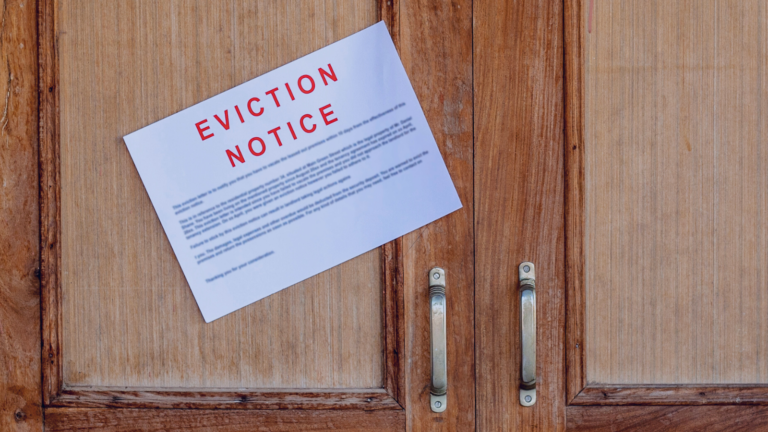
Or Jin, who was laid off in May and was terrified by a threatening eviction notice. She didn’t understand the law and didn’t know where to go for help, until she found our hotline.

Then there’s Ana, who faced the impossible choice of feeding her kids or paying her rent after her work hours were cut in half. Paralyzed with fear and anxiety at the prospect of losing her home, she called CCHR in desperation just the day before her eviction hearing.

Fortunately, our case workers were there to take Sebastian, Jin and Ana’s calls, informing them about their rights, how the eviction process works, and connecting them with legal assistance, financial aid, and counselling services.
We field calls from dozens of people in similar circumstances each month, guiding 90% of them to a positive outcome. In the past two months, the number of people we’ve heard from has doubled, overwhelming our capacity to respond. We are now deeply worried we won’t be able to help hundreds more keep their homes as the pandemic carries on.

The Canadian Centre for Housing Rights (CCHR) has a long history of developing and driving forward precedent-setting litigation.
When we were known as the Centre for Equality Rights in Accommodation (CERA), we represented clients across Canada and acted in an advisory capacity on many ground-breaking legal challenges to policies and practices that denied disadvantaged groups access to housing, including:
CCHR also led a coalition of organizations, and served as a plaintiff on Tanudjaja, the historic challenge against the federal and provincial governments for violations of section 7 and 15 of the Canadian Charter of Rights and Freedoms. The case argued that governments created and maintained conditions that lead to and sustain homelessness and inadequate housing.
Across our history, CCHR has promoted interpretations and applications of the Canadian Charter of Rights and Freedoms in order to address rights violations faced by disadvantaged groups in need of housing. In this regard, CCHR worked in collaboration with the Charter Committee on Poverty Issues (CCPI), a national committee of low-income people and legal experts that advanced the rights of impoverished persons in Canada. CCHR assisted CCPI in test case litigation involving particularly marginalized groups.
CCHR also coordinated CCPI’s intervention at the Supreme Court of Canada in Gosselin v Québec (Attorney General), [2002] 4 SCR 429 – the only Charter case to date in which the Court had the opportunity to consider the extent to which section 7 of the Charter places obligations on governments to provide an adequate level of social assistance to prevent homelessness and its adverse effects.
CCHR also coordinated CCPI’s intervention in the case of New Brunswick (Minister of Health and Community Services) v G. (J.), [1999] 3 SCR 46 which dealt with access to legal aid for those living in poverty; Baker v Canada (Minister of Citizenship and Immigration), [1999] 2 SCR 817, on the status of international human rights law in the exercise of administrative discretion; Eldridge v British Columbia (Attorney General), [1997] 3 SCR 624 on positive obligations to address needs of disadvantaged groups under section 15 of the Charter; Thibaudeau v Canada, [1995] 2 SCR 627 on the rights of single mothers; Walker v Prince Edward Island, [1995] 2 SCR 407 and R. v Prosper, [1994] 3 SCR 236 on the right to state-funded counsel for impoverished accused; and Symes v Canada, [1993] 4 SCR 695 on the application of section 15 to socio-economic policies and taxation.
Lorem ipsum dolor sit amet, consetetur sadipscing elitr, sed diam nonumy eirmod tempor invidunt ut labore et dolore magna aliquyam erat, sed diam voluptua. At vero eos et accusam et justo duo dolores et ea rebum. Stet clita kasd gubergren, no sea takimata sanctus est Lorem ipsum dolor sit amet.
Lorem ipsum dolor sit amet, consetetur sadipscing elitr, sed diam nonumy eirmod tempor invidunt ut labore et dolore magna aliquyam erat, sed diam voluptua. At vero eos et accusam et justo duo dolores et ea rebum. Stet clita kasd gubergren, no sea takimata sanctus est Lorem ipsum dolor sit amet.
Lorem ipsum dolor sit amet, consetetur sadipscing elitr, sed diam nonumy eirmod tempor invidunt ut labore et dolore magna aliquyam erat, sed diam voluptua. At vero eos et accusam et justo duo dolores et ea rebum. Stet clita kasd gubergren, no sea takimata sanctus est Lorem ipsum dolor sit amet.
Lorem ipsum dolor sit amet, consetetur sadipscing elitr, sed diam nonumy eirmod tempor invidunt ut labore et dolore magna aliquyam erat, sed diam voluptua. At vero eos et accusam et justo duo dolores et ea rebum. Stet clita kasd gubergren, no sea takimata sanctus est Lorem ipsum dolor sit amet.
Lorem ipsum dolor sit amet, consetetur sadipscing elitr, sed diam nonumy eirmod tempor invidunt ut labore et dolore magna aliquyam erat, sed diam voluptua. At vero eos et accusam et justo duo dolores et ea rebum. Stet clita kasd gubergren, no sea takimata sanctus est Lorem ipsum dolor sit amet.
Lorem ipsum dolor sit amet, consetetur sadipscing elitr, sed diam nonumy eirmod tempor invidunt ut labore et dolore magna aliquyam erat, sed diam voluptua. At vero eos et accusam et justo duo dolores et ea rebum. Stet clita kasd gubergren, no sea takimata sanctus est Lorem ipsum dolor sit amet.
Lorem ipsum dolor sit amet, consetetur sadipscing elitr, sed diam nonumy eirmod tempor invidunt ut labore et dolore magna aliquyam erat, sed diam voluptua. At vero eos et accusam et justo duo dolores et ea rebum. Stet clita kasd gubergren, no sea takimata sanctus est Lorem ipsum dolor sit amet.
Lorem ipsum dolor sit amet, consetetur sadipscing elitr, sed diam nonumy eirmod tempor invidunt ut labore et dolore magna aliquyam erat, sed diam voluptua. At vero eos et accusam et justo duo dolores et ea rebum. Stet clita kasd gubergren, no sea takimata sanctus est Lorem ipsum dolor sit amet.
Lorem ipsum dolor sit amet, consetetur sadipscing elitr, sed diam nonumy eirmod tempor invidunt ut labore et dolore magna aliquyam erat, sed diam voluptua. At vero eos et accusam et justo duo dolores et ea rebum. Stet clita kasd gubergren, no sea takimata sanctus est Lorem ipsum dolor sit amet.
Lorem ipsum dolor sit amet, consetetur sadipscing elitr, sed diam nonumy eirmod tempor invidunt ut labore et dolore magna aliquyam erat, sed diam voluptua. At vero eos et accusam et justo duo dolores et ea rebum. Stet clita kasd gubergren, no sea takimata sanctus est Lorem ipsum dolor sit amet.