

Evictions can push people into housing instability, homelessness and poverty. Yet across Canada, eviction is often treated as an inevitable outcome rather than a last resort.
A new publication by Balanced Supply of Housing, Evictions in Canada: The Impact of Evictions on Security of Tenure and the Right to Housing, brings together researchers from across the country to examine the growing impact of evictions on renters and communities.
The collection explores:
Among the contributors is CCHR’s Director of Policy, Research & Law Reform, Margaret Flynn, who co-authored Chapter 3 with Sarah Buhler: Evictions as a First Resort? Proportionality and Discretion in Saskatchewan Eviction Decisions.
The chapter examines 1,906 Saskatchewan eviction cases involving rental arrears and found that eviction was ordered in 99.27% of cases. The research raises important questions about whether existing legal protections are being meaningfully applied and whether sufficient consideration is being given to alternatives that could help renters remain housed.
Most tenants who received eviction orders owed less than two months’ rent
– Chapter 3: Evictions as a First Resort? Proportionality and Discretion in Saskatchewan Eviction Decisions
At a time when governments across Canada are grappling with housing affordability and rising homelessness, this publication offers important evidence on the role eviction plays in housing instability and what can be done to better protect renters.
On June 17 and 18, the Canadian Centre for Housing Rights (CCHR), in partnership with Community Legal Education Ontario (CLEO), co-hosted a two-day virtual Housing Law Conference that brought together more than 1,000 housing professionals, advocates, legal practitioners, and community service providers from across Ontario.
The conference addressed the growing demand for accessible and practical legal education on housing rights. Through engaging plenary sessions and interactive workshops, participants deepened their understanding of key topics, including tenant rights, the Residential Tenancies Act (RTA), Landlord and Tenant Board (LTB) processes, human rights, and emerging legal and policy issues affecting renters across the province.
CCHR played a key role in planning and delivering the conference. Ayesha Adamjee, Manager of Education and Community Initiatives, and Brightson Okenwa, Senior Legal Education Specialist, served on the conference planning committee, helping to develop a program that reflected the realities faced by tenants and the professionals who support them.
Ayesha moderated the opening plenary, Tenant Rights 101 and Residential Tenancies Act Coverage, providing participants with a strong foundation in Ontario’s residential tenancy laws. On the second day, Brightson moderated the plenary panel, Compassion Fatigue and Vicarious Trauma, which explored the emotional impact of frontline housing advocacy and highlighted strategies for supporting the well-being and resilience of professionals working in the sector.
Later that day, Ayesha and Brightson co-facilitated the session on Remedies at the Landlord and Tenant Board and Beyond, sharing practical guidance on the legal remedies available to tenants and discussing strategies for advancing housing rights through the LTB.
The conference also showcased the expertise of CCHR’s Legal Services team. Julie Matheson, Lawyer, presented on Gender-Based Violence and Housing, examining the intersection of housing insecurity and gender-based violence and the legal protections available to survivors. Ademofe Oye-Adeniran, Legal Services Team Lead, as a speaker, led a session on The Landlord and Tenant Board Process, providing participants with practical guidance on filing applications, navigating hearings, and understanding the tribunal process.
The response from participants was overwhelmingly positive. CLEO reported nearly 990 unique online attendees, with many organizations participating as teams, bringing total attendance to well over 1,000 participants.
The conference demonstrated the strength of collaboration in advancing housing justice. By bringing together legal experts, advocates, and community organizations, CCHR and CLEO created an engaging learning environment that strengthened knowledge, fostered collaboration, and reinforced a shared commitment to protecting the right to housing.
CCHR extends its sincere thanks to CLEO, the conference planning committee, the speakers, moderators, and everyone who participated in making the conference a success. We look forward to continuing our partnership to expand access to housing rights education and support those working every day to advance the right to adequate housing.

5 Questions for Change is a monthly feature that brings you insights from the people at CCHR working on the frontlines every day to advance the right to housing.
This month, we are talking to Ayesha Adamjee, Manager of Education and Community Initiatives
1. What are two issues you see renters struggling with most right now?
Security of tenure is the first big issue I see tenants struggling with. I see so many tenants who live in constant fear of eviction, or who have been evicted, often multiple times. In many cases, tenants have done nothing to warrant an eviction. Rather landlords would like to increase the profit from their investment and will file evictions for own use or extensive renovations.
I’m also seeing more and more tenants who are exempt from the Residential Tenancies Act (RTA). This is usually when tenants share a kitchen or a bathroom with their landlord. I’ve had a few cases now where the landlord will learn about this exemption and make the unit look like it’s RTA-exempt.
2. What are the most common questions or myths you hear from renters and service providers?
The most common myth I see by far is that all lease clauses are valid. For example, many leases will include a clause that says that tenants are responsible for maintenance, or for putting a certain amount of money towards maintenance. I’ve seen leases that require tenants to move out at the end of the lease term, that says they’re not allowed guests or pets, and it’s important for tenants to know that you can’t “contract out” of your rights. This means that if your lease has a clause that conflicts with the law, it is invalid and unenforceable.
3. What is one resource, either from CCHR or other sources, you find yourself referring people to most often – and why?
I almost always have the Steps to Justice resources and guided pathways open. They are absolutely invaluable in helping tenants understand and enforce their rights. In today’s housing crisis, where most legal professionals are prioritizing evictions, the guided pathways are especially useful in making tenant applications accessible to tenants who can’t afford to hire a legal representative.
4. If you could offer one piece of advice to renters across the country, what would it be?
Learn about your rights and share them with your community! So many landlords exploit tenants who don’t know their legal rights, or who are isolated from their communities. Since they control your housing, landlords are in a position of power over you. Knowledge is power and you are always going to be stronger together. My best advice is to get as organized and as educated as possible.
5. What drives you to do the work you do at CCHR?
We’ve all said that housing is a human right, and that everyone needs a safe place to call home. But housing for me goes so far beyond just someone’s home. Everything in a person’s life is completely dependent upon the adequacy of your housing. It’s impossible to be happy and healthy without a safe and well-maintained house. You can’t be expected to maintain a job if you don’t have a place to go home to at the end of the day. When your rent is too expensive, it’s hard to afford groceries, gas or leisure activities. Without adequate and affordable housing, a person’s whole life falls apart. So to me, there is nothing more important than helping our community stay safely and securely housed.
Note: The information provided in this message is legal information only. It is not legal advice and is not a substitute for legal advice. If you require legal advice, please contact CCHR’s Legal Services team, a lawyer, or your local community Legal Aid clinic.

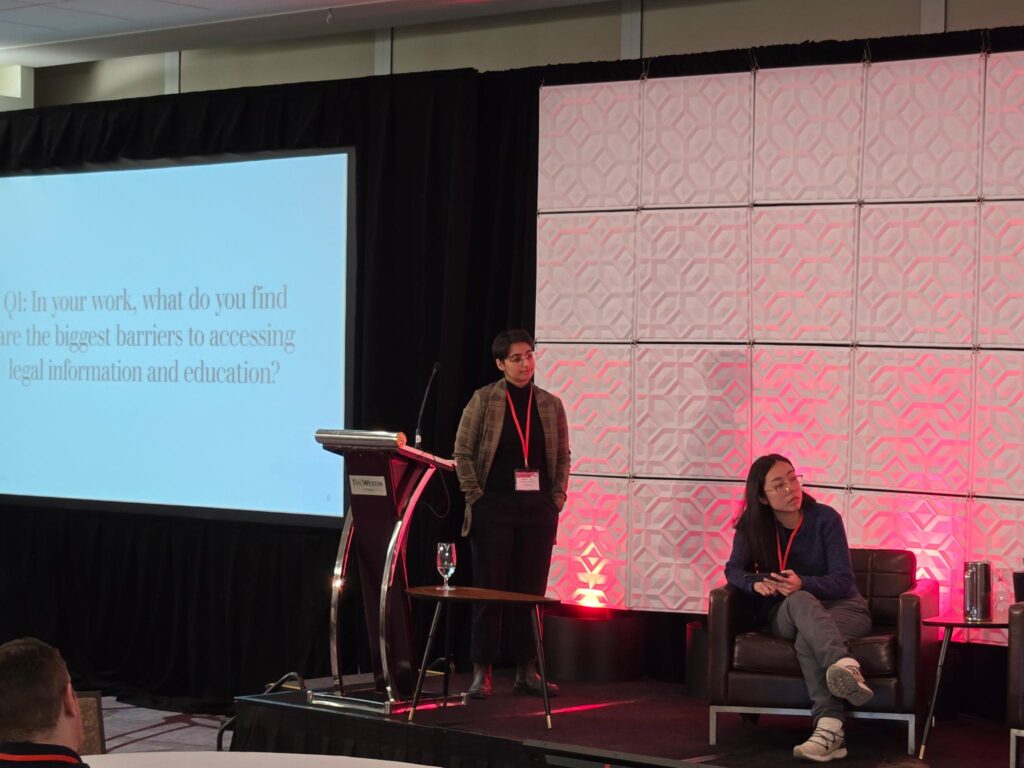
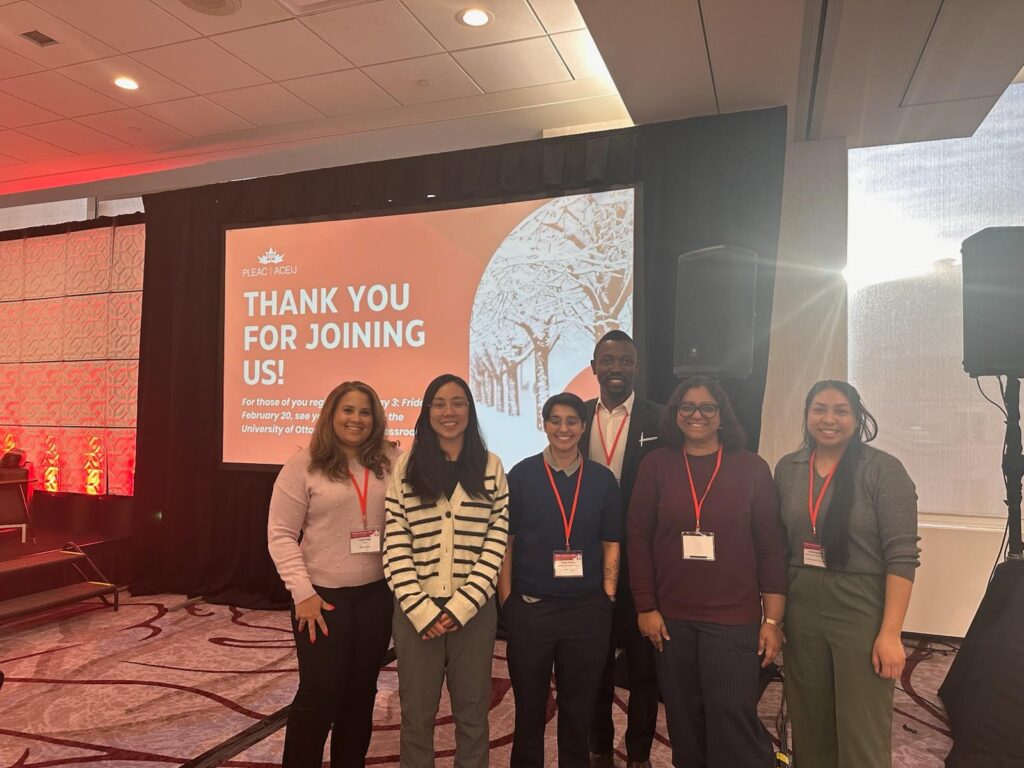
Last week, we had the privilege of attending and contributing to the PLEAC 2026 Conference in Ottawa, co-hosted by Community Legal Education Ontario and the Ontario Justice Education Network.
The PLEAC Conference is the annual national gathering hosted by the Public Legal Education Association of Canada (PLEAC), a national nonprofit organization that serves as an umbrella organization for public legal education and information (PLEI) groups across Canada. The conference aims to bring together public legal educators, legal clinic and legal aid professionals, community organizations, and academics to share knowledge, reflect, and learn together.
In York Region, nearly 47% of renter households spend 30% or more of their income on housing, according to the 2021 Census. In 2024, 878 people in York Region were experiencing homelessness, including unsheltered individuals, those in emergency shelters, and those in transitional housing. These figures show the urgent need for coordinated local supports to help residents access stable, affordable housing.
Our Community Lawyer, Ayesha Adamjee, and Outreach and Education Advisor, Jessie Tang, led a workshop on a holistic community approach to housing support in York Region, alongside Camilla Singh, Coordinator at Agincourt Community Services Association, and Michelle Sutherland, Director of Legal Services at the Community Legal Clinic of York Region. The session explored how coordinated local networks can strengthen public legal education and address housing instability.
“This workshop reminded us that collaboration is key. By connecting legal and non-legal community agencies, we can strengthen supports that help more people access safe, secure, and affordable housing in York Region,” said Ayesha and Jessie.
We would like to thank the Public Legal Education Association of Canada (PLEAC), Community Legal Education Ontario, the Ontario Justice Education Network, our workshop partners at Agincourt Community Services Association and the Community Legal Clinic of York Region, and all the participants who joined us. We are especially grateful to United Way Greater Toronto for supporting our work in York Region and enabling our team to contribute to this important conference.


Earlier this month, we were pleased to have our Director of Policy, Research, and Law Reform, Margaret Flynn, as a featured speaker at the Niagara Roundtable on Housing.
The Niagara Roundtable brings together seasoned experts and emerging leaders to foster informed dialogue and advance action on the policy, social, and economic issues shaping Canada’s future.
The roundtable brought together leading voices, including Honourable David Hickey, Minister responsible for the New Brunswick Housing Corporation; William Strange, Professor, Economic Analysis and Policy, Camrost Felcorp Chair in Urban Economics at the University of Toronto’s Rotman School of Management; and Taya Cook, Executive Vice President at Urban Capital, for a solutions-focused discussion on Canada’s housing challenges.
The discussion focused on three key areas:
– The impact of high housing costs on young people and marginalized communities
– Housing challenges in communities beyond major urban centres
– Various perspectives on more inclusive housing outcomes, including rights-based perspectives
Canada continues to face a growing housing and homelessness crisis. While the crisis affects people from all walks of life, it disproportionately impacts those already facing barriers, including Indigenous people, Black and other racialized people, 2SLGBTQ+ people, people with disabilities, seniors, women, youth, and low-income households.
Drawing on CCHR’s policy and client services work, Margaret highlighted how housing insecurity affects stability in people’s daily lives, undermining safety, health, and the ability to fully participate in their communities.
“Access to housing is fundamentally about stability. Without security of tenure, our communities cannot build the foundation they need to thrive,” said Margaret Flynn.
Building on these conversations, we remain focused on advancing the right to housing, ensuring that everyone in Canada has access to a safe, secure, and affordable home. By highlighting the real-world impacts of housing insecurity and advocating for evidence- and rights-based solutions, we aim to support stronger, more stable communities across the country.

5 Questions for Change is a monthly feature that brings you insights from the people at CCHR working on the frontlines every day to advance the right to housing.
This month, we are talking to Victoria Wan, a Lawyer from our Client Services team.
1. What are two issues you see renters struggling with most right now?
The two most common issues I see right now are Above Guideline Increase (AGI) applications and maintenance issues. I talk to tenants in Toronto due to our legal services program, but I know these two issues are common throughout Ontario.
AGI applications are based on circumstances where a landlord can apply to the Landlord and Tenant Board (LTB) to raise the rent above the guideline amount. Each year, the Ontario government sets a “rent increase guideline”, which is the percentage that a landlord is allowed to increase the rent for rent-controlled units. Rent-controlled units are defined by the Residential Tenancies Act.
Maintenance issues within the rental unit or in the building are very common as well, especially for older buildings in Toronto and in Ontario. Always document and write to your landlord when you have a complaint about a maintenance issue. If the landlord is not responding, contact the Property Standards for your municipality, which is usually the phone number 311.
2. Is there a recent case or experience that stayed with you and what did it reveal about renters’ realities?
In our current economic reality, an extreme rent increase is very difficult for renters. As I mentioned above regarding rent-controlled units, there are more and more rental units that do not have rent control. Rental units that are not rent controlled include new buildings, additions to existing buildings, and most new basement apartments that are occupied for the first time for residential purposes after November 15, 2018.
I worked on a case that involved an extremely high rent increase of $600 in one year, on top of a current monthly rent of $3,000. Because the rental home was newly constructed and rented for the first time around 2021, the landlord is legally permitted to increase the rent to any amount. Despite attempts to negotiate with the landlord, the landlord was not willing to permit a lower increase amount.
The problem is with the rent decontrol laws set by the Ontario government in 2018. If you disagree with these rent decontrol laws, talk to your Ontario Member of Provincial Parliament.
3. When you represent tenants at the LTB, what’s the most common misconception you encounter- either from renters or landlords?
When I represent tenants at the Landlord and Tenant Board, a common misconception that I see from landlords or their representatives are that tenants are trying to be “annoying” to landlords and their representatives. Standing up for your legal rights as a tenant is not “annoying.” Being able to know and enforce your tenant rights is part of advancing the human right to housing in Canada. We live in a real world, where there are real human beings and families struggle to pay rent and afford food for themselves and their family. Learn more about CCHR’s work on the right to housing in Canada here.
4. If you could offer one piece of advice to renters across the country, what would it be?
Learn your rights as a tenant in your province. Seek free legal advice on tenant rights where you can get it. Read the municipal and provincial websites with the summaries on your rights as a tenant. CCHR has a resource for renters facing eviction for each province and territory in Canada here: Resources for renters facing eviction – Canadian Centre for Housing Rights.
If you are lucky to have secure and safe housing, try to support other tenants who are facing difficult challenges.
5. What drives you to do the work you do at CCHR?
I really do admire and appreciate my coworkers at CCHR, and I am inspired by the work they do to advance good housing policies and recommendations at every level of government. I am also driven by supporting affordable housing, and learning and working to find better solutions for renters in Ontario, and across the country. I hope to help in advancing the work for every Canadian to know that housing is a human right recognized by the United Nations.
Note: The information provided in this message is legal information only. It is not legal advice and is not a substitute for legal advice. If you require legal advice, please contact CCHR’s Legal Services team, a lawyer, or your local community Legal Aid clinic.

5 Questions for Change is a monthly feature that brings you insights from the people at CCHR working on the frontlines every day to advance the right to housing.
This month, we are talking to Rose Vandermeer, Senior Engagement and Education Advisor.

On November 24, 2025, Bill 60 was passed in Ontario, changing 16 laws, including the Residential Tenancies Act (RTA). The changes made to the RTA apply only to applications made after Bill 60 comes into force. As of December 18, 2025, the changes to the RTA were not yet in effect.
The following highlights some, but not all, of the expected changes under Bill 60.
When your landlord claims you owe rent, there is a “grace period” of 14 days during which a landlord cannot file to evict you. Under Bill 60, it is shortened to 7 days. This means that if your landlord gives you an N4 form for non-payment of rent, you have only 7 days to pay before an eviction application can be filed with the Landlord and Tenant Board (LTB).
During your eviction hearing for unpaid rent, you can raise issues that you could have included in your own application to the LTB, such as if your landlord has failed to do maintenance. However, under Bill 60, you must pay 50% of the money your landlord claims you owe before the hearing to be allowed to raise these issues.
When you or your landlord disagree with an LTB order, you have 30 days to request that the LTB review their decision. Under Bill 60, requests to review must be submitted within 15 days of the decision or order. However, if the LTB considers it “just and appropriate in the circumstances to extend the time to request the review,” the LTB still has the power to give more time.
If your landlord gave you an N12 notice because they or their family need the unit to live in, they had to pay you one month’s rent as compensation, regardless of how much notice they gave. Under Bill 60, if the termination date on the N12 notice is at least 120 days after the notice is given, your landlord does not have to pay this compensation.
While other changes may come in the future, importantly, the following two protections still apply:
Your rent can only be increased once every 12 months with 90 days’ notice. For properties first occupied before November 15, 2018, your landlord is not allowed to increase the rent more than the province’s annual guideline amount unless they apply for an Above the Guideline Increase.
Tenancies still automatically continue month to month once the initial lease period ends. This means once the lease period ends, you are not required to move out or renew the lease, and your original lease terms continue.
For more information about your rights under Bill 60, please contact our tenant services team.

5 Questions for Change is a monthly feature that brings you insights from the people at CCHR working on the frontlines every day to advance the right to housing.
This month, we are talking to Julie Matheson, a Lawyer from our Client Services team.

November 22, 2025, marks the 25th anniversary of National Housing Day. Just as Labour Day is an opportunity to reflect on the achievements of the labour movement and continue fighting for workers’ rights, National Housing Day is a day to recognize housing as a fundamental human right and take action to ensure everyone has a safe, secure, and affordable place to call home.
Over the past year, we have seen some important progress on the right to housing across the country, alongside some deeply concerning backsliding. Below, we highlight key right to housing wins, misses, and opportunities ahead. You can also find information about National Housing Day events in your region to join the movement to continue pushing for concrete action to end housing need and homelessness.
Across the country, a few provincial and territorial governments took some promising steps to expand rent regulation, while ongoing opportunities remain to close loopholes and ensure renters have secure, affordable homes for the long term:
In other jurisdictions, opposition parties are planning or introduced private members’ bills calling for stronger rent regulation, where rent regulation is weak and/or contains loopholes – for example, in Nova Scotia, Ontario, and Quebec – or where rent regulation does not exist at all – for example, in Saskatchewan. See CCHR’s commentary on the importance of strong rent regulation to protect renters in Saskatchewan, Alberta, and across the country.
In addition to launching its new homelessness strategy, Manitoba also took important steps to protect some of its community housing stock and require landlords to cover costs for renters forced to leave their homes due to health or safety issues. See CCHR’s deputation to the Manitoba Standing Committee on Legislative Affairs on the importance of ensuring landlords fulfill their obligations to provide safe and habitable homes for renters.
Across the country, some jurisdictions either reduced or failed to ensure equitable access to community housing for those in greatest need:
Following a year of both progress and backsliding on the right to housing across the country, we look forward to upcoming opportunities to centre housing as a human right in the national discourse and in law and policy at all levels of government, through ongoing research, policy advocacy, law reform, and community engagement and mobilization.
Later this year, Neha, the National Housing Council review panel on the right to housing for women, Two Spirit, Trans, and gender-diverse people, will release recommendations for the federal government to uphold this right, following engagement with people with lived experience, housing rights organizations, and experts on human rights, housing, and social inequality. See CCHR’s recommendations, where we outline the impact of intersectional factors on housing security, gendered experiences of homelessness, Canada’s duty and failure to uphold the right to housing for women and gender-diverse people, and key principles and actions to realize this right.
On June 12, 2025, the Federal Housing Advocate called for the National Housing Council to launch its next review panel to examine the lack of accessible housing across Canada, in light of the disproportionate rates of housing need and homelessness among people with disabilities. CCHR looks forward to engaging in this review panel and helping advance the right to housing for people with disabilities, drawing on our ongoing policy and research work in this area.
As we highlight in our analysis of the 2025 federal budget, attaching conditions for provinces and territories to access federal funding is critical to ensure an effective, coordinated approach to ending homelessness and housing need. The federal government exercised this power by using the Canada Housing Infrastructure Fund as an incentive for provinces and territories to adopt elements of the Renters’ Bill of Rights. It also introduced a new Build Communities Strong Fund that has the potential to take a similar approach.
Building on our advocacy to date, we continue to call for the federal government to strengthen the Renters’ Bill of Rights and ensure that provinces and territories commit to implementing strong renter protections in order to access federal funding, including long-term affordability, security, and other critical protections for renters. At the same time, we look forward to ongoing work with provinces and territories to strengthen renter protections across the country – both in policy and in practice.
As noted above, CCHR was proud to join coalitions of advocates, researchers, and lived experts across various sectors – including housing, homelessness, health care, drug policy, disability justice, human rights, settlement, migrant justice, public transit, and more – to push back against harmful laws in Ontario. We are also active members of Right to Housing Toronto, Right to Housing Manitoba, National Right to Housing Network, and other community, legal, and research networks, where we work with partners across the country to advance the right to housing.
Looking ahead to 2026, we will continue building and engaging with coalitions to drive collective advocacy and action to end homelessness and housing need.
Lorem ipsum dolor sit amet, consetetur sadipscing elitr, sed diam nonumy eirmod tempor invidunt ut labore et dolore magna aliquyam erat, sed diam voluptua. At vero eos et accusam et justo duo dolores et ea rebum. Stet clita kasd gubergren, no sea takimata sanctus est Lorem ipsum dolor sit amet.
Lorem ipsum dolor sit amet, consetetur sadipscing elitr, sed diam nonumy eirmod tempor invidunt ut labore et dolore magna aliquyam erat, sed diam voluptua. At vero eos et accusam et justo duo dolores et ea rebum. Stet clita kasd gubergren, no sea takimata sanctus est Lorem ipsum dolor sit amet.
Lorem ipsum dolor sit amet, consetetur sadipscing elitr, sed diam nonumy eirmod tempor invidunt ut labore et dolore magna aliquyam erat, sed diam voluptua. At vero eos et accusam et justo duo dolores et ea rebum. Stet clita kasd gubergren, no sea takimata sanctus est Lorem ipsum dolor sit amet.
Lorem ipsum dolor sit amet, consetetur sadipscing elitr, sed diam nonumy eirmod tempor invidunt ut labore et dolore magna aliquyam erat, sed diam voluptua. At vero eos et accusam et justo duo dolores et ea rebum. Stet clita kasd gubergren, no sea takimata sanctus est Lorem ipsum dolor sit amet.
Lorem ipsum dolor sit amet, consetetur sadipscing elitr, sed diam nonumy eirmod tempor invidunt ut labore et dolore magna aliquyam erat, sed diam voluptua. At vero eos et accusam et justo duo dolores et ea rebum. Stet clita kasd gubergren, no sea takimata sanctus est Lorem ipsum dolor sit amet.
Lorem ipsum dolor sit amet, consetetur sadipscing elitr, sed diam nonumy eirmod tempor invidunt ut labore et dolore magna aliquyam erat, sed diam voluptua. At vero eos et accusam et justo duo dolores et ea rebum. Stet clita kasd gubergren, no sea takimata sanctus est Lorem ipsum dolor sit amet.
Lorem ipsum dolor sit amet, consetetur sadipscing elitr, sed diam nonumy eirmod tempor invidunt ut labore et dolore magna aliquyam erat, sed diam voluptua. At vero eos et accusam et justo duo dolores et ea rebum. Stet clita kasd gubergren, no sea takimata sanctus est Lorem ipsum dolor sit amet.
Lorem ipsum dolor sit amet, consetetur sadipscing elitr, sed diam nonumy eirmod tempor invidunt ut labore et dolore magna aliquyam erat, sed diam voluptua. At vero eos et accusam et justo duo dolores et ea rebum. Stet clita kasd gubergren, no sea takimata sanctus est Lorem ipsum dolor sit amet.
Lorem ipsum dolor sit amet, consetetur sadipscing elitr, sed diam nonumy eirmod tempor invidunt ut labore et dolore magna aliquyam erat, sed diam voluptua. At vero eos et accusam et justo duo dolores et ea rebum. Stet clita kasd gubergren, no sea takimata sanctus est Lorem ipsum dolor sit amet.
Lorem ipsum dolor sit amet, consetetur sadipscing elitr, sed diam nonumy eirmod tempor invidunt ut labore et dolore magna aliquyam erat, sed diam voluptua. At vero eos et accusam et justo duo dolores et ea rebum. Stet clita kasd gubergren, no sea takimata sanctus est Lorem ipsum dolor sit amet.