This resource is designed to help tenant leaders develop inclusive and participatory strategies to engage their community to claim their right to housing. It outlines the key principles for increased participation within tenant communities, building effective leadership, and mobilizing and organizing tenants. It also offers a guide on how to create strategic planning tools such as community action plans, communication plans and advocacy plans.
Inside the toolbox you’ll find:

This resource is designed to help tenant leaders understand the responsibilities of each level of government to implement the right to housing, so that they can target their housing advocacy more effectively. It outlines the obligations of each level of government to implement the right to housing, as well as how to overcome jurisdictional challenges. It also offers a guide on what tenant leaders can do to advocate for their right to housing at each level of government.
Inside the toolbox you’ll find:

This resource provides an overview of a human rights-based approach to housing. It is designed to help tenant leaders identify the root causes of housing challenges, the groups whose rights are most impacted by those challenges, and the institutions that have an obligation resolve them. It provides guiding tools to develop rights-based housing solutions and to hold institutions accountable for implementing the right to housing.
Inside the toolbox you’ll find:

This document guides renters and community leaders on how to effectively engage with their local government to advance the right to housing in their communities. It includes information on how City Councils address housing issues, and provides guidelines for tenant leaders to make submissions and deputations at City Council meetings so that they can advocate for the issues that are most important to them.
Inside the toolbox you’ll find:

This guide provides renters and community leaders with information on how to effectively engage with their provincial or territorial government to advance the right to housing in their communities. It includes an overview of how provinces and territories regulate the rights of tenants, and how provincial and territorial legislatures introduce laws that can impact the right to housing. It also includes a guide for tenant leaders on how to be involved in these processes by writing a letter to their local representative or petitioning the legislative assembly.
Inside the toolbox you’ll find:

This guide provides renters and community leaders with information on how to make a submission to the Federal Housing Advocate, to claim their right to housing. It provides an overview of the Advocate’s role and the review process. It also guides tenant leaders on how to structure a submission, what information to include and how to gather it, as well as a practical checklist and examples of previous submissions that have been made by community members.
Inside the toolbox you’ll find:
Generally, unless a rental agreement includes a term stating that smoking is not permitted in the unit or building, the Residential Tenancies Act (RTA) allows a tenant to smoke in their unit as long as the second-hand smoke does not interfere with the landlord’s or another tenant’s reasonable enjoyment of the rental unit and complex. Even if a rental agreement permits smoking, the Landlord and Tenant Board (LTB) can order a tenant to stop smoking indoors if the LTB determines that smoking has interfered with another tenant’s, or the landlord’s, reasonable enjoyment of the rental unit and complex.
Non-smoking terms in rental agreements are generally valid. If the tenancy agreement or lease specifies that it is a non-smoking unit, then smoking is not allowed in that unit. Smoking in a non-smoking unit may result in the tenant receiving an eviction notice from the landlord.
A landlord may designate specific areas at the residential complex where smoking can occur, but the landlord is not required to do this. The Smoke Free Ontario Act prohibits people from smoking in common areas of their apartment buildings, including in areas like parking garages.
Removing a smoke detector creates a fire hazard. This can put both the tenant and other occupants in danger. A landlord may start eviction proceedings if a tenant removes or tampers with any smoke detector. The LTB may issue an eviction order in these circumstances.
Neither landlords nor tenants are allowed to change the terms of a tenancy without the agreement of the other party. If a rental agreement does not prohibit smoking, the landlord is not allowed to impose a no smoking policy inside rental units. Similarly, if a rental agreement prohibits smoking tobacco, but not cannabis, then the landlord cannot later impose a ban on smoking cannabis. However, even if a lease may allow some forms of smoking, a tenant may still face eviction if their smoking interferes with another tenant’s reasonable enjoyment in the building or causes damage to the rental unit and complex.
Second-hand smoke in a tenant’s unit may be found to be an interference with a tenant’s reasonable enjoyment under Ontario’s Residential Tenancies Act. Your landlord has a responsibility to provide you with reasonable enjoyment in your unit. If smoke from outside or other units substantially interferes with your enjoyment of your unit, then your landlord has a responsibility to take steps to resolve this. To do that, your landlord may need information about what you are experiencing.
To prepare the information to send to your landlord, write down detailed notes that describe the issues you are experiencing, including these key details:
Once you have prepared the information about the issues you are facing, communicate in writing to your landlord outlining the problem and asking them to correct it. If your landlord does not respond to you in a reasonable time, send them a reminder. Keep copies of all your correspondence with the landlord.
When a landlord receives a complaint about smoke in their building, the first thing they should do is investigate the problem. If the landlord establishes that a tenant has been impacted by second-hand smoke, the landlord should take reasonable and timely steps to resolve the issue.
Some examples of what a landlord can do include:
If smoke is coming from outside through windows or vents, a landlord may ask the tenant not to smoke within a specified distance from the building.
A landlord may start eviction proceedings against the tenant causing the second-hand smoke. Sometimes the tenant who smokes may not be evicted. Instead, they may be ordered to stop smoking where they had been smoking before.
If your landlord tells you that they have been unable to stop the smoking, you may wish to write to the landlord and request they provide the details of the steps they have taken to address your complaint.
Yes, provided your tenancy is protected under the Residential Tenancies Act. However, a landlord should be given a reasonable amount of time to remedy the situation as described in the section above on second-hand smoke exposure. Tenants cannot file applications against other tenants at the Landlord and Tenant Board (LTB) but they may file an application against a landlord if the landlord does not take timely and reasonable steps to come up with a solution. As an applicant, you will have to provide evidence that shows:
The LTB will rely on the best and most credible evidence that is presented, which in some cases is simply the spoken testimony of the tenant who is experiencing the second-hand smoke. Other evidence that a tenant can produce to help the LTB make a decision includes notes they have written that describe what they have experienced and how they have tried to remedy the issues, or photos they have taken that show what has happened.
Although it can be helpful, it is not always necessary to have scientific evidence of second-hand smoke. Air quality, hair, and urine sample tests may show exposure to second-hand smoke, but the LTB may require this type of evidence to be interpreted by an expert or the professional who conducted the test. It is not certain that a tenant will be compensated for the costs of these types of tests. It is important to seek legal advice before filing an application at the LTB.
Through the course of a hearing, the LTB will first hear evidence and arguments from each side, then determine whether the tenant who complained about second-hand smoke has experienced substantial interference with their reasonable enjoyment of the rental unit or the complex, and finally grant appropriate remedies. Depending on the circumstances of each case, these remedies may include:
A landlord is required to balance conflicting rights between tenants, when an accommodation granted to one tenant impacts the rights of another tenant. In doing this, the landlord must address the degree of harm caused to another person by the accommodation provided. For example, a person with a tobacco addiction may be harmed if they are not allowed to smoke, and a person with a smoke allergy may be harmed if they are exposed to second-hand smoke. In this scenario, a landlord must consider the degree of harm endured by both of these tenants and decide who will experience the greatest degree of harm as a result of any remedies the landlord takes to resolve the issue.
If you are experiencing a situation where your rights conflict with someone else’s, it is important to seek legal advice and to work with your landlord to find a solution. This may include the landlord making changes to the building to make it more inclusive or allowing a tenant to smoke while also protecting the person being harmed by the second-hand smoke. Alternatively, it may involve relocating one of the tenants or ending the tenancy of the tenant interfering with the reasonable enjoyment of the other.
For more information about conflicting rights, please see the Ontario Human Rights Commission’s Policy on Human Rights and Rental Housing and Policy on ableism and discrimination based on disability.
City of Toronto – Smoke-free Apartments, Condos and Co-ops: https://www.toronto.ca/community-people/health-wellness-care/health-programs-advice/live-tobacco-free/second-hand-smoke-and-the-law/smoke-free-apartments-condos-and-co-ops/
Smoke Free Housing Ontario: https://smokefreehousingon.ca/taking-action/
Canadian Lung Association: https://www.lung.ca/lung-health/smoking-and-tobacco/second-hand-smoke-also-dangerous
Some information about testing from Canadian Centre for Occupational Health and Safety: https://www.ccohs.ca/oshanswers/psychosocial/ets_health.html. Link on “Can Exposure to ETS be measured?” https://www.ccohs.ca/oshanswers/psychosocial/ets_health.html
TEL-87743-18 (Re), 2018 CanLII 42920 (ON LTB), <https://canlii.ca/t/hs1d5>, retrieved on 2022-09-22
EAL-65791-17 (Re), 2017 CanLII 60551 (ON LTB), <https://canlii.ca/t/h5xz3>, retrieved on 2022-09-20
TET-09767-10 (Re), 2010 CanLII 79604 (ON LTB), <https://canlii.ca/t/2f8fv>, retrieved on 2022-09-19
The Canadian Centre for Housing Rights (CCHR) provides free, individualized services to renters in Ontario who are facing challenges in their housing.

While financially supported by The Law Foundation of Ontario, the Canadian Centre for Housing Rights is solely responsible for all content on this page.

Finding a new home is one of the most stressful parts of moving to a new country. The Canadian Centre for Housing Rights (CCHR) regularly works with new immigrants to Ontario who have questions about their rights as tenants, and with settlement organizations that offer information to new Canadians. This page provides key housing tips and resources to help newcomers who are renting in Ontario.
The resources listed below are all free to use. In addition to the list below, you can also call 211, which is a free 24-hour helpline that can connect you to thousands of community organizations across Ontario. You can also use their online directory: https://211central.ca/
Services in Ontario:
Services in Toronto:

While financially supported by The Law Foundation of Ontario, the Canadian Centre for Housing Rights is solely responsible for all content on this page.
Canada’s growing housing crisis has prevented many households, particularly those living on lower incomes, from finding and keeping an adequate, accessible and affordable place to call home. As rents continue to soar and affordable housing options dwindle, it’s crucial to protect the few affordable housing options that are available.

Rent subsidies are a much-needed tool that governments use to help ensure lower-income households can afford a home. However, in Ontario, social housing landlords have the power to revoke a tenant’s subsidy in some circumstances – for example if a person has not provided the correct paperwork. This power held by these landlords is discretionary – meaning that, even if there are grounds to do so, they can choose not to revoke a subsidy. This is an important choice which can have tremendous consequences for households who are living in poverty and who likely do not have the means to secure an affordable home without a subsidy. A household that cannot afford an unsubsidized rent could face eviction due to the inability to pay a higher rent, and their eviction could also lead to homelessness.
Given the potentially catastrophic consequences when a person loses their rent subsidy, the Canadian Centre for Housing Rights (CCHR) is deeply concerned about an Ottawa Community Housing (OCH) tenant, Charlas Mackenzie, who lost his rent subsidy. In 2019, OCH chose to revoke Mr. Mackenzie’s subsidy because of minor reporting errors. In making its decision, OCH chose not to consider Mr. Mackenzie’s circumstances when deciding whether revoking his subsidy was reasonable or fair, nor whether losing his subsidy would likely render him homeless or separate him from his young children.
Since losing his subsidy, Mr. Mackenzie has appealed OCH’s decision, with no luck in reversing it to date. On September 20, 2022, the Ontario Court of Appeal will hear Mr. MacKenzie’s appeal, and the Court has granted CCHR intervenor status because of our expertise in human rights in housing. This status will allow CCHR to present arguments during the appeal hearing to promote Mr. MacKenzie’s right to housing and the rights of his children. We will assist the Court by arguing that OCH should have exercised its discretion in a way that was consistent with the right to housing and the rights of the child.
Since OCH’s decision to revoke a subsidy will effectively evict Mr. MacKenzie, CCHR will argue that, under the requirements of the right to housing – which Canada recognizes in the National Housing Strategy Act (NHSA) and various international human rights treaties – OCH should have considered whether eviction was a necessary and proportionate response to a minor issue, and whether the issue could have been resolved without resorting to eviction. CCHR will also argue that, under the rights of the child, OCH should have considered the impacts of its decision on Mr. Mackenzie’s children.
The Court’s decision will set an important precedent for households living in social housing across Ontario. We hope that CCHR’s intervention will help establish that social housing must be managed in a way that respects tenants’ human rights.
CCHR’s factum is available here.
CCHR extends many thanks to Jackie Esmond, Aminah Hanif, and Danielle Bisnar of Cavalluzzo LLP for their pro bono representation on this case.
If you are facing a loss of subsidy issue in Ontario, visit Legal Aid Ontario to find a clinic near you that may be able to help.
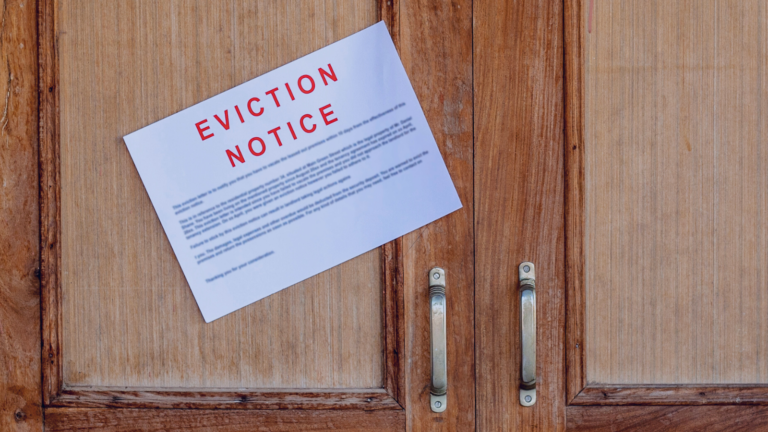
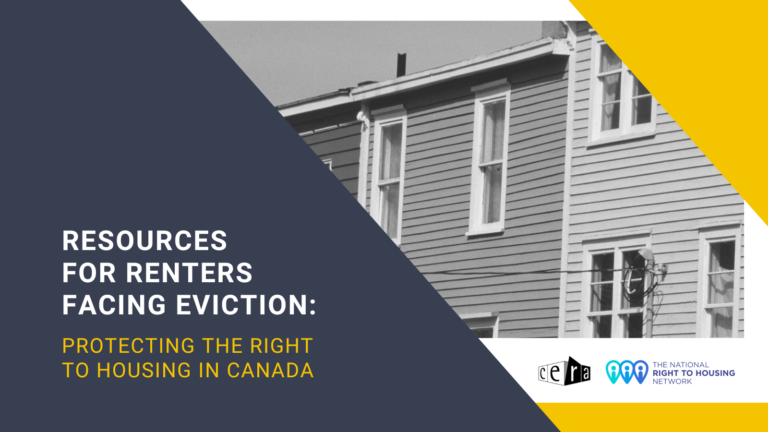
If you are facing eviction anywhere in Canada, these resources may be able to help you:

This guide provides Ontario tenants living in condominiums with information on the unique issues they may face.
If you rent a condominium unit, your condominium’s governing documents, as well as Ontario’s Condominium Act, Residential Tenancies Act and the Human Rights Code interact to create the legal landscape in which you live.
Landlords and condominiums corporations both have certain obligations and duties that they owe to tenants. This guide will help you identify what legal rights you are entitled to and provide a brief overview of the laws governing your tenancy.
In this guide, you’ll find information about:
Lorem ipsum dolor sit amet, consetetur sadipscing elitr, sed diam nonumy eirmod tempor invidunt ut labore et dolore magna aliquyam erat, sed diam voluptua. At vero eos et accusam et justo duo dolores et ea rebum. Stet clita kasd gubergren, no sea takimata sanctus est Lorem ipsum dolor sit amet.
Lorem ipsum dolor sit amet, consetetur sadipscing elitr, sed diam nonumy eirmod tempor invidunt ut labore et dolore magna aliquyam erat, sed diam voluptua. At vero eos et accusam et justo duo dolores et ea rebum. Stet clita kasd gubergren, no sea takimata sanctus est Lorem ipsum dolor sit amet.
Lorem ipsum dolor sit amet, consetetur sadipscing elitr, sed diam nonumy eirmod tempor invidunt ut labore et dolore magna aliquyam erat, sed diam voluptua. At vero eos et accusam et justo duo dolores et ea rebum. Stet clita kasd gubergren, no sea takimata sanctus est Lorem ipsum dolor sit amet.
Lorem ipsum dolor sit amet, consetetur sadipscing elitr, sed diam nonumy eirmod tempor invidunt ut labore et dolore magna aliquyam erat, sed diam voluptua. At vero eos et accusam et justo duo dolores et ea rebum. Stet clita kasd gubergren, no sea takimata sanctus est Lorem ipsum dolor sit amet.
Lorem ipsum dolor sit amet, consetetur sadipscing elitr, sed diam nonumy eirmod tempor invidunt ut labore et dolore magna aliquyam erat, sed diam voluptua. At vero eos et accusam et justo duo dolores et ea rebum. Stet clita kasd gubergren, no sea takimata sanctus est Lorem ipsum dolor sit amet.
Lorem ipsum dolor sit amet, consetetur sadipscing elitr, sed diam nonumy eirmod tempor invidunt ut labore et dolore magna aliquyam erat, sed diam voluptua. At vero eos et accusam et justo duo dolores et ea rebum. Stet clita kasd gubergren, no sea takimata sanctus est Lorem ipsum dolor sit amet.
Lorem ipsum dolor sit amet, consetetur sadipscing elitr, sed diam nonumy eirmod tempor invidunt ut labore et dolore magna aliquyam erat, sed diam voluptua. At vero eos et accusam et justo duo dolores et ea rebum. Stet clita kasd gubergren, no sea takimata sanctus est Lorem ipsum dolor sit amet.
Lorem ipsum dolor sit amet, consetetur sadipscing elitr, sed diam nonumy eirmod tempor invidunt ut labore et dolore magna aliquyam erat, sed diam voluptua. At vero eos et accusam et justo duo dolores et ea rebum. Stet clita kasd gubergren, no sea takimata sanctus est Lorem ipsum dolor sit amet.
Lorem ipsum dolor sit amet, consetetur sadipscing elitr, sed diam nonumy eirmod tempor invidunt ut labore et dolore magna aliquyam erat, sed diam voluptua. At vero eos et accusam et justo duo dolores et ea rebum. Stet clita kasd gubergren, no sea takimata sanctus est Lorem ipsum dolor sit amet.
Lorem ipsum dolor sit amet, consetetur sadipscing elitr, sed diam nonumy eirmod tempor invidunt ut labore et dolore magna aliquyam erat, sed diam voluptua. At vero eos et accusam et justo duo dolores et ea rebum. Stet clita kasd gubergren, no sea takimata sanctus est Lorem ipsum dolor sit amet.